Bonfire blues: How to help your pets on Fireworks Night

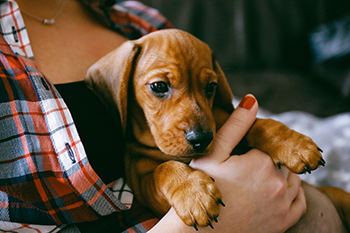
Dog being calmed
It’s fireworks season, and whether we’re gearing up for Bonfire Night, Diwali or New Year’s Eve, these spectacular displays often have a special place in our heart. But for our beloved pets, fireworks aren’t so much fun.

Quick Links

Ahead of the big bang, we polled 1,000 UK dog, cat and rabbit owners to shed light on the best ways to manage our pet’s firework fears.

  • 35% of cat owners (and 24% of pet owners overall) make no preparations to comfort their pet before fireworks.
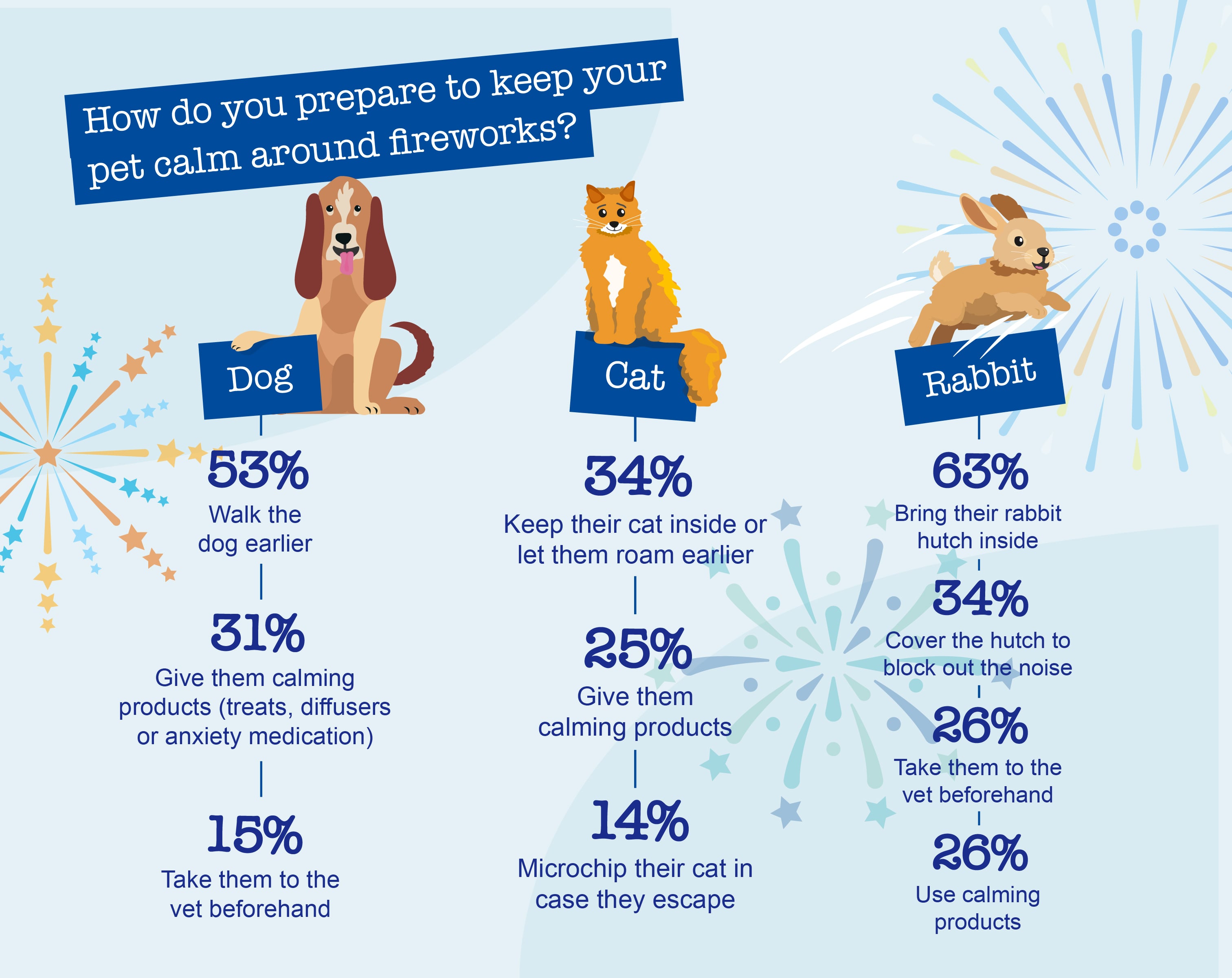
  • A majority of dog owners (53%) change their habits and walk the dog earlier than usual before the fireworks start.
  • Londoners are the most likely to seek professional help to calm their pets before a fireworks event – 27% take their pet to the vet and 21% seek specialist behaviourist advice.
  • Younger millennials (25-34) are more than twice as likely as baby boomers (55+) to use calming products (like diffusers and treats) to keep their pets calm before fireworks.
  • Pet owners in Scotland are the most likely (18%) to play relaxing music or TV to relax their pets before fireworks.
Whether we’re gathered in a back garden or a packed crowd, let’s be honest – fireworks are fun! But while we’re staring at the sky going ‘ooh’ and ‘aah’, it’s no secret that our pets aren’t exactly having a blast.

According to the pet owners we polled, fireworks are a familiar problem.

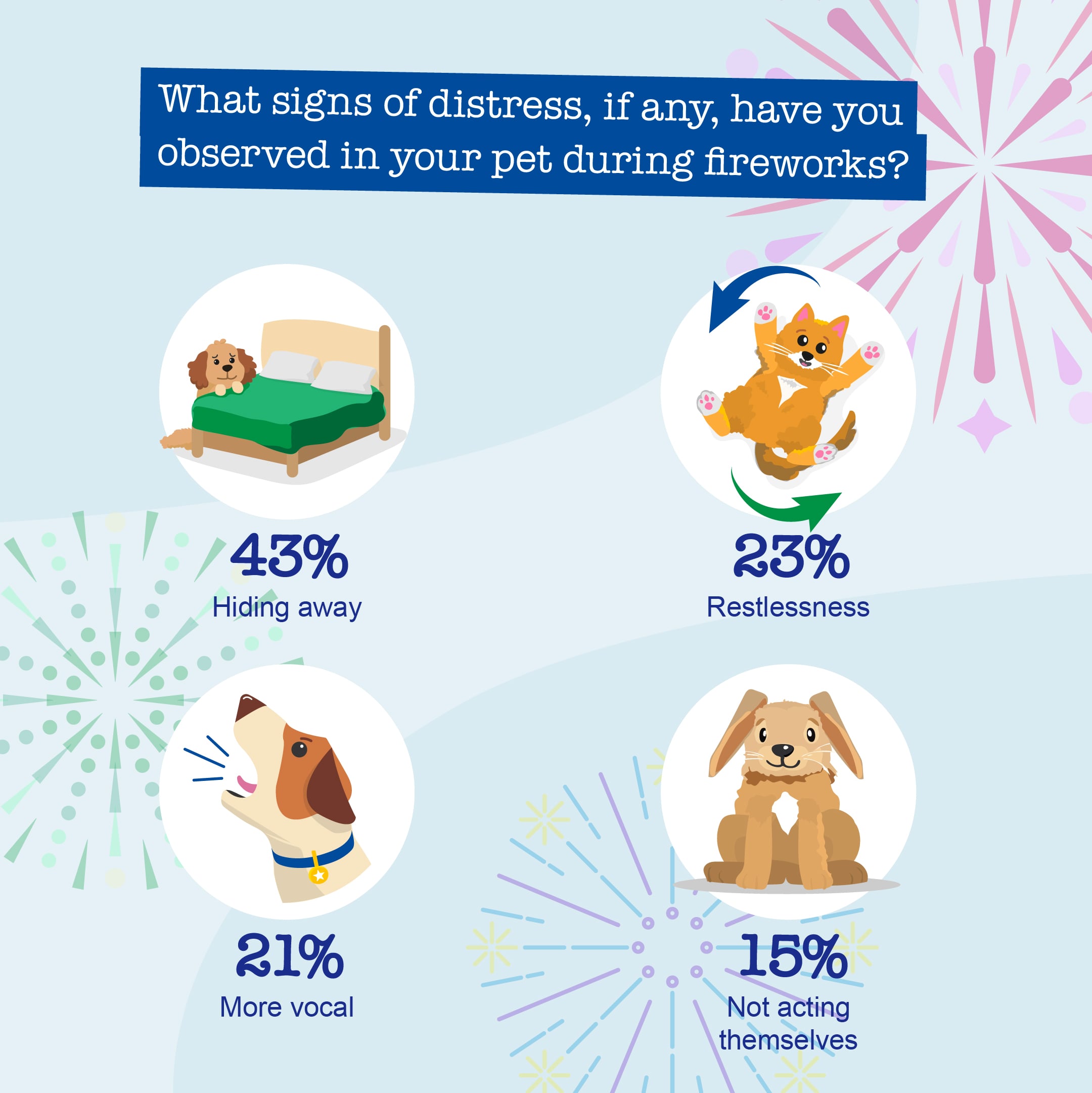
Signs of distress in pets during fireworks

Fireworks might be pretty, but at the first snap, crackle and pop, many animals simply skedaddle.

  • Cats aren’t keen on Catherine wheels – three-quarters (75%) are affected by fireworks, and 51% hide away during a display.
  • Rabbits also do a runner – 55% hide away, while 95% are affected overall.
  • And dogs don’t exactly dig fireworks – 76% are affected and 37% hide away.

There were regional differences in how pets react. Pet owners in Yorkshire and the Humber were the most likely (51%) to report that their pets hide away, while pets in Scotland were the most likely to be vocal (33%).

But not every pet is fazed by fireworks. Just under a quarter (24%) of pet owners said their dogs, cats or rabbits show ‘no distress’, and this was highest in the south-west (31%).

For any pet owner, our natural instinct is to comfort our precious pets at the first signs of distress. But when the first fireworks fly, how can we keep them calm? For some pet owners, it’s not rocket science.

Swipe to view more

Comfort them by stroking them/speaking to them 25% 
Move them somewhere quiet and cosy 12%
Close windows and curtains to muffle the sound of firework and stop them escaping 11%
Play relaxing music or TV to mask the sound of fireworks 10%
I play with them to distract them 10%

Younger pet owners (16-24) were the most likely to say they’d play with their pets (16%) compared to 6% of people aged over 55. In contrast, Gen Z were the least likely (20%) to comfort through stroking, whereas over 55s were the most likely (30%).

We spoke to small animal vet Catherine Henstridge, also known as Cat the Vet, for some expert insights on how to manage our pets’ firework stress.

“Fireworks are about fun, but during events like Bonfire Night, pet owners understandably want to minimise any disruption and anxiety.

“By being proactive, pet owners can mitigate the impact of sudden noises and flashing lights. Whether it’s offering a treat that will take a while to eat and keep them distracted, or taking them for an early walk, you can set the tone for a relaxed evening.

“And by adopting a calm tone of voice and demeanour, you can send a message that it’s ‘business as usual’.

“Some myths persist – for example, ‘It’s untrue that rabbits aren’t distressed by fireworks, they just hide it very well!

“If your pet really struggles, gradual sound desensitisation in the weeks before fireworks season – using videos or specialist programmes – can make a big difference, speak to your vet about how best to go about this.”

 
Beyond the headline numbers, our survey found that parents are generally proactive at managing their pets’ stress levels. For example, just 2% of dog owners leave their pets to self-soothe following fireworks – it was slightly higher among owners of cats (4%) and rabbits (5%).

Meanwhile, pet owners in the East Midlands (29%) and south-west (29%) are the most likely to react by stroking or speaking to their pet. This is less common in the north-east (17%).

For some, music is the best medicine. Playing relaxing music or TV was most popular in Scotland (18%) compared to 5% of pet owners in Wales.

Our survey also uncovered some generational differences in how pet owners prepare for fireworks.

Younger millennials (25-34) are more than twice as likely as baby boomers (55+) to use calming products (like diffusers and treats) to keep their pets happy. In fact, 25-34 year-olds are over 12 times more likely (25% versus 2%) than people aged 55+ to seek specialist advice from a behaviourist.

On a big fireworks night, it’s all about keeping our pets relaxed, calm and safe. But how can pet owners take an approach to fireworks that…works?

How to prepare to keep your pet calm around fireworks

Context matters, and across the UK we found differences in how pet owners prepare for the big night. Pet owners in Scotland are the most likely to walk their dog earlier than usual (46%), compared to a quarter (25%) of owners in Greater London.

On the other hand, Londoners are most likely to seek professional help when it comes to calming their beloved pets. 27% of respondents in Greater London said they take their pet to the vet and seek specialist behaviourist advice (21%). This was higher than the national average of 13% and 10% respectively.

A hutch should only ever be a shelter, never the sole or main accommodation for your rabbits. The RWAF has guidelines for safe outdoor housing, so it’s worth checking you’re meeting those ahead of fireworks season.

While the majority of pet owners try to calm their pets before the fireworks start, many told us they don’t make any preparations for their cats (35%) dogs (19%) and rabbits (8%). In fact, the south-east had the highest rate of pet parents who don’t prepare for fireworks (36%).

So how can we ensure our furry friends can relax and enjoy – or at least tolerate – an occasion with fireworks?

  1. Soundproof your home. Some noise may be inevitable, but by closing curtains and drawing blinds you can dampen the biggest bangs.
  2. Provide distractions. Treats and toys can take your pet’s mind off the unexpected noises outside.
  3. Offer reassurance. By simply stroking your pet and being a ‘good cop’ – nothing too strict – you can calm any nerves.
  4. Create a safe space. Create a quiet, cosy space and let your pet retreat there if they choose –  but don’t force them into one room.
  5. Take them elsewhere. Does a friend or family member live in a quieter location? Consider dropping them off for a sleepover!

No one wants to imagine the unthinkable where our pet comes into harm’s way. But accidents happen, so having the right pet insurance can provide you with peace of mind – long after the fireworks have fizzled out.

Make sure your pet is microchipped, and their details are up to date, just in case they bolt in panic.

Survey of 1,000 UK dog, cat or rabbit owners (16+) conducted by Censuswide between 22.09.2025-24.09.2025

Follow us

Petplan is a trading name of Pet Plan Limited (Registered in England No. 1282939) and Allianz Insurance plc (Registered in England No. 84638), Registered office: 57 Ladymead, Guildford, Surrey GU1 1DB.

Pet Plan Limited is authorised and regulated by the Financial Conduct Authority. Financial Services Register No. 311969. Allianz Insurance plc is authorised by the Prudential Regulation Authority and regulated by the Financial Conduct Authority and the Prudential Regulation Authority. Financial Services Register No. 121849. Pet Plan Limited is a subsidiary of Allianz Insurance plc.