How to camp responsibly with your dog

Nick Jones sitting beside a labradoodle
Nick Jones
Dog Behaviourist and Dog Expert Witness
Planning a night or two under the stars? Here’s everything you need to know about responsible camping with dogs – from practical tips to expert advice.
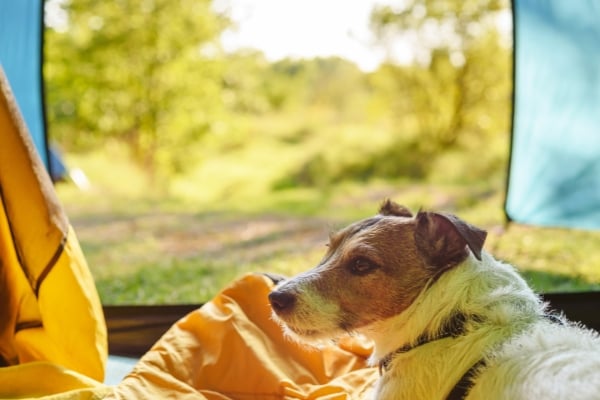
jack russell in a tent

Quick Links

It’s hard to beat sitting outside your tent on a summer’s evening – and camping with a dog by your side makes it even more special.

With warmer days and lighter evenings ahead, now’s the perfect time to start planning your camping adventure. Our expert advice on camping with dogs will help you do just that – and ensure you have a safe, enjoyable and stress-free holiday.

When planning to go camping with a dog for the first time, it’s important to plan ahead. Before you set off on your camping trip...

  • Make sure your dog’s flea, tick and worming treatments are up to date
  • Check that their microchip details are current and that they’re wearing a legible ID tag
  • Locate a vet near your campsite in case of emergency
  • Confirm your dog insurance policy is up to date, so you can relax and enjoy your time away

If you’re unsure how your dog will handle camping, why not ease them in gently with a short practice session at home before you go? Gradual exposure and positive reinforcement will help them settle more easily when you go camping for real.

When planning a dog-friendly camping trip, consider the following.

Start by considering the general area you want to visit. Are there plenty of dog-friendly places to explore nearby, such as beaches, riverside walks or woodland trails? What about heritage sites, gardens and other attractions that welcome dogs? Check whether any local pubs or cafés are dog-friendly, too.

Also consider how long the journey will take – if your dog isn’t used to travelling long distances in the car, a shorter drive will minimise stress. 

Doing this research in advance will make the trip smoother and give you confidence that your chosen destination suits both you and your dog.

Once you’ve decided on an area, look for dog-friendly campsites that meet your requirements. 

Site rules vary widely: some allow dogs off-leash, while others – such as those run by the Camping and Caravanning Club – require dogs to remain on a lead at all times or permit off-leash exercise only in designated areas. Ensure you know the site’s policy before you book.

If you choose a site where dogs are allowed to roam free, make sure you’re confident of your dog’s recall. You’ll be expected to keep your dog under control at all times, so they can’t steal sausages from the tent next door! 

If your dog tends to be anxious around other dogs, choosing a campsite with restricted off-leash areas may be the best option, so you can relax without the worry of other canine visitors approaching your pitch.

While some campsites allocate specific pitches, others allow you to camp wherever you choose. 

A quiet spot that offers shade and privacy is ideal when camping with dogs. Avoid pitching too near to other tents or busy thoroughfares, such as paths to toilets or washing-up areas. A windbreak or screen can also help create a more secure-feeling pitch if you think your dog may be sensitive to people or other dogs passing close by.

For more adventurous campers, wild camping (pitching a tent outside the bounds of a campsite) can offer peace and seclusion. This is legal throughout Scotland but requires permission from the landowner elsewhere, with the exception of Dartmoor National Park

If you plan to try wild camping with a dog, do so responsibly:

  • Keep your dog on a lead
  • Camp away from roads, houses and livestock
  • Only stay for one or two nights
  • Follow ‘leave no trace’ principles – bag and remove all litter, including dog waste
  • Be aware of local fire restrictions. If you do light a fire, make sure you put it out before you leave

Once you’ve arrived and set up your pitch, take your dog for a short walk around the campsite. This helps them familiarise themselves with the area and begin to feel comfortable in the new environment. 

Sleeping away from home can be a big change for your dog – especially when it’s their first camping experience. Maintain your dog’s usual routines around mealtimes, exercise and bedtime to help give them a sense of normality amid all the change. 

Use familiar bedding to create a safe, comfortable spot in the tent. Bear in mind that tents get cooler overnight, so pack an extra blanket or two to keep your dog warm. If you’re sleeping on an inflatable mattress, covering it with a blanket will help protect it from sharp claws.

Unfamiliar nighttime noises – owls, rustling undergrowth or other campers – may keep your dog alert or prompt barking. Offer calm reassurance and encourage them to settle. Some dogs benefit from soft background music, which can help to mask external sounds and encourage them to relax.


There’s always a lot to take when you go camping, and camping with a dog requires a few extras. Make a list and leave plenty of time to pack, so nothing gets forgotten.

Bring enough of your dog’s usual food for the duration of your stay, along with bowls and treats. If you know you’ll be more active than usual, consider taking a little extra. 

Transfer dry food into an airtight container to prevent it from becoming damp or attracting wildlife. Store wet food in a cool box once opened. A long-lasting chew is also useful for keeping your dog occupied while you’re preparing meals or setting up.

Bring a large water carrier so that drinking water is easily accessible at your pitch. A portable bottle for walks and day trips is also essential; be especially mindful of keeping your dog hydrated in hot weather.

Pack a couple of dog towels and your dog’s usual bedding. If you don’t have space for the whole bed, bring the cushion pad or a favourite blanket. A crate, if your dog is used to one, can also provide a safe, familiar place for them to relax at the campsite.

Packing a few well-loved toys will help provide comfort and reassurance, while a long line – secured to a tether post – will allow your dog to move around even when leashed, preventing boredom.

Pack a basic canine first-aid kit, including a tick remover. Take a torch for late-night toilet breaks, and a reflective or light-up collar for visibility.

For car journeys, make sure you have a seatbelt harness, travel crate or dog guard. And don’t forget to bring plenty of poo bags – responsible camping with dogs means leaving no trace.

Taking a dog on a camping trip means being mindful of a few extra safety considerations. 

  • Never leave your dog tied up and unattended at your tent, as they may feel stressed or vulnerable.
  • Avoid leaving them unsupervised inside a vehicle or zipped-up tent – both of which can heat up quickly.
  • Be aware of any hazards that your dog may encounter around the campsite – from moving vehicles and water bodies to wildlife such as ticks, adders or harmful plants.
  • If campfires or barbeques are permitted, make sure your dog stays well clear – sparks can fly and the ground may remain hot long after the flames have died down.
  • Check your dog over at the end of each day, particularly if you’ve been walking in long grass or woodland – a groom also gives you the chance to spot any sore paws or minor cuts.
  • Keep your pitch clear of potential hazards such as cooked bones, skewers, hot equipment or sharp tools.

If you think your dog has eaten something that may potentially be harmful, contact a vet immediately. If you have dog insurance with Petplan, you can also log into your My Petplan account to speak with an expert about any health concerns, any time of day. Log in to your My Petplan account to get started.

Camping with dogs can be a wonderfully rewarding experience, giving you the chance to slow down, explore new places and spend meaningful time together outdoors. 

However, it also introduces many new experiences to your dog at once: eating meals outdoors, sleeping in an unfamiliar space, being on the lead more often, and sharing space with other people and dogs. Keep an eye on how your dog is responding for clues on whether they are feeling relaxed and happy or showing signs of stress.

If your first camping adventure isn’t perfect, treat it as a learning experience. Small adjustments can make all the difference next time. With planning, patience and a responsible approach, camping with a dog could become your new favourite holiday.

Found this article useful? Want to see similar content and engage with like-minded dog owners? Follow us on Petplan’s Facebook page.
 Nick Jones sitting beside a labradoodle
Petplan Behaviourist Expert

When it comes to pet behaviour, you'll go far to find anyone more qualified than Nick Jones. Nick has been a dog behaviourist for over 20 years, he has a Masters in Canine Behaviour and Training and is a full member of the Canine and Feline Behaviour Association. He also supports UK legal cases as a Dog Expert Witness.

Puppy training, dog recall, seperation anxiety, settling a new kitten - these are just a few of the topics that Nick has accurately co-written for you.

Find out more about Nick

Follow us

Petplan is a trading name of Pet Plan Limited (Registered in England No. 1282939) and Allianz Insurance plc (Registered in England No. 84638), Registered office: 57 Ladymead, Guildford, Surrey GU1 1DB.

Pet Plan Limited is authorised and regulated by the Financial Conduct Authority. Financial Services Register No. 311969. Allianz Insurance plc is authorised by the Prudential Regulation Authority and regulated by the Financial Conduct Authority and the Prudential Regulation Authority. Financial Services Register No. 121849. Pet Plan Limited is a subsidiary of Allianz Insurance plc.