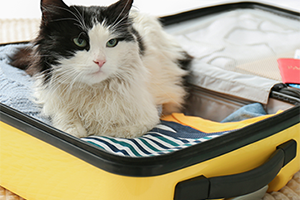
Renting with Pets UK: Your Rights Under the New Law

Discover your rights and responsibilities as a pet owner, including what the Renter’s Right Act means for tenants in England.

Quick Links

Renting a property with a cat, dog or other pet can be challenging. In the past, many landlords in the UK have preferred to ban pets from rented accommodation entirely. And despite more than half of UK households owning a pet, only 7% of private listings are currently advertised as pet-friendly rentals. 

The good news is that the Renters’ Rights Act, which came into force in England on 1st May 2026, is designed to make it easier for people living in rented accommodation to have a pet. 

Whether you’re already renting with pets, hoping to get a pet in the future or are looking for pet-friendly rentals, here’s what you need to know about your rights and responsibilities. 

In England, the Renters’ Rights Act now gives tenants the right to request to have a pet in the home that they currently rent. Landlords must carefully consider these requests and can’t unreasonably refuse them.

However, while they can still refuse in certain circumstances, they must now provide their reasons in writing.

Before the Renters’ Rights bill for pets, many tenancy agreements included blanket bans on any pets. While some landlords chose to allow pets, tenants didn’t have any formal process to challenge these decisions. 

Under the new rules:

  1. Tenants can formally request, in writing, to keep a pet in a property they currently rent.
  2. Landlords then have 28 days to respond in writing. They must consider requests on a case-by-case basis, requesting extra information if needed, but they can’t refuse a request without reasonable justification.
  3. Once consent is granted, it applies to that specific pet and usually can’t be withdrawn without good reason. But tenants should bear in mind that each pet requires a separate or new request.
  4. If a landlord refuses a request, tenants can challenge the decision if they believe it’s unfair or unjustified.

In England, rental deposits are capped by law, so landlords can’t increase your deposit if they allow you to keep a pet.

A lot of landlords worry about pet-related damage, noise complaints or increased wear and tear if they allow pets. But research from Battersea Dogs & Cats Home found these concerns are often unfounded:

  • 76% of landlords who allow pets don’t find any damage caused by dogs or cats in their rental properties
  • 73% didn’t see any increase in wear and tear due to pets
  • 84% didn’t deal with noise or other complaints from neighbours regarding the pets in their properties
  • On average, the total reported cost of pet-related damage was £300 per tenancy, compared with £775 for non-pet-related damage caused by tenants who didn’t own a pet

The same research found that tenants with pets often stay in properties for longer, creating more stability for landlords and reducing the cost associated with finding new tenants.

The new legislation only applies to a property you’re already renting. If you’re looking to move, you’ll still need to look for pet-friendly houses for rent, and landlords can still decide not to accept pets.

If you’re already renting a property and want to add a pet to your family, here’s what to do.

Requests need to be made in writing, either via email or printed letter. Make sure to include all the information your landlord needs. Whether you’ve already chosen a pet or are looking to adopt one in the future, consider creating a ‘pet CV’, including information such as:

  • A photo of your potential pet
  • Their name and age
  • Details of veterinary and emergency contacts 
  • Copies of vaccinations, worming and flea treatment records
  • Any training they’ve completed, like puppy training or advanced obedience
  • Details about pet insurance and whether they’re covered for illness or injury

If you haven’t chosen a pet yet, explain the type of animal you’d like to get and how you plan to care for them. If you’ve rented with a pet before, a reference from your previous landlord can help confirm you left the property in good condition.

Once you’ve submitted your request, your landlord has 28 days to respond. They may ask for additional information – for example, the size of the pet or their behaviour. Once you’ve answered these questions, the landlord must respond within seven days, or within the remaining 28-day period, whichever is later.

Landlords may sometimes reasonably refuse your request – for example, if: 

  • Another tenant has an allergy
  • The property is unsuitable for the type of pet
  • The pet is illegal to own
  • They’re a leaseholder and the freeholder doesn’t allow pets 

Landlords can’t typically refuse requests for reasons such as:

  • They don’t like pets
  • They think pets will cause damage to the property 
  • They think allowing a pet may affect future rentals 
  • They’ve had problems with pets in previous tenancies

If you think your request has been unfairly refused, you can appeal to the Private Rented Sector Ombudsman Service. All private landlords must join this service, once it’s fully operational.

The Renters’ Rights Act covers England, so if you’re in other parts of the UK, the rules and regulations will be different.

In Wales, tenancies are covered by the Welsh government’s Renting Homes legislation, which requires landlords and renters to use clear agreements detailing their rights and responsibilities. 

At the moment, there’s no formal process for tenants to request to keep a pet. Instead, pets are treated as an additional term within a rental contract, with the agreement of both the landlord and tenant. 

Unlike England and Scotland, Wales doesn’t cap rental deposits. So, pet owners could offer to pay a slightly higher deposit to reassure the landlord that any damage by pets will be covered.

The Housing (Scotland) Act 2025 includes provisions that will give tenants in private and social housing the right to request permission to keep a pet, with landlords unable to unreasonably refuse. These provisions have not yet come into force, and further regulations are expected to clarify how the system will work in practice before a commencement date is announced.

In Scotland, there’s a higher rental deposit cap than in England, of up to two months’ rent. Again, pet owners could use this in discussions with the landlord and offer to pay a bigger deposit upfront to cover any pet-related damage.

In Northern Ireland, pets are also at the landlord’s discretion. Northern Ireland doesn’t have legislation equivalent to the Renters’ Rights Act, so while tenants can ask their landlord if they’d consider allowing them to keep a pet, there’s no legal requirement for them to say yes.

Assistance dogs, including guide dogs and medical alert dogs, are generally treated differently to pets under equality legislation.

In England, Scotland, and Wales, the Equality Act 2010 protects disabled people from discrimination. In Northern Ireland, similar protections exist under the Disability Discrimination Act 1995 (Northern Ireland). This means landlords must make reasonable adjustments for tenants who rely on an assistance dog, including allowing them – even if they usually have a standard ‘no pets’ policy.

Before getting a new pet, consider the responsibilities of looking after a dog or cat, and whether the property you’re living in meets their needs.

It’s also important to think about how you’d address any behaviour or training issues – and remember that separation anxiety in dogs and cats can cause issues when you’re not at home. If you have dog or cat insurance with Petplan, you can use our free Pet Expert Chat service to talk with experts about any behavioural concerns you might have.

No, but if you’re already renting a property, landlords in England have to consider your request to have a pet, and they can’t unreasonably refuse. 

If permission has been granted, you can’t usually be evicted simply for having a pet. But if your tenancy agreement doesn’t allow pets and you get one anyway, you may be in breach of the agreement.

If your landlord reasonably denies your request and you get a pet anyway – or if your pet damages the property, causes complaints from the neighbours or creates a safety risk – your landlord may take action, as you have breached your tenancy agreement. 

In England, the Renters’ Rights Act came into force in 2026. It gives tenants the right to request to keep a pet, and landlords cannot unreasonably refuse. Different rules apply in Northern Ireland, Scotland and Wales. 

Do you have any tips on renting with pets? Let us know over on our Facebook page

Last updated: June 16, 2026

Follow us

Petplan is a trading name of Pet Plan Limited (Registered in England No. 1282939) and Allianz Insurance plc (Registered in England No. 84638), Registered office: 57 Ladymead, Guildford, Surrey GU1 1DB.

Pet Plan Limited is authorised and regulated by the Financial Conduct Authority. Financial Services Register No. 311969. Allianz Insurance plc is authorised by the Prudential Regulation Authority and regulated by the Financial Conduct Authority and the Prudential Regulation Authority. Financial Services Register No. 121849. Pet Plan Limited is a subsidiary of Allianz Insurance plc.