
If you’ve just brought home a new kitten, you’re probably spending time getting to know them and settling them into your home. But it’s also important to look after their health and welfare – which includes deciding when to get your new cat neutered.
Kitten & cat neutering: Your guide to the process
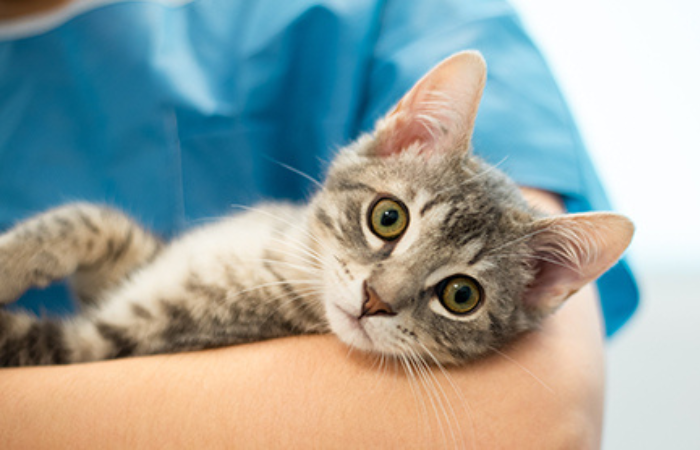
Here’s everything you need to know about cat neutering, including the benefits, what the procedure involves and how much it costs.
Quick Links
What is cat neutering?
Neutering is a type of surgery that prevents animals from reproducing. Female cats are spayed – an operation that removes the ovaries or the ovaries and uterus. Male cats are castrated – a quick routine procedure that removes both testicles.
Both procedures are carried out under general anaesthesia. Most cats can go home the same day and make a full recovery within a few days.
Should I neuter my kitten?
Neutering your kitten is part of responsible cat ownership. It doesn’t just prevent unwanted litters of kittens, but reduces certain health and behavioural issues.
When to neuter a cat
The best age to neuter a kitten is around four to five months old, after their first full course of vaccinations.
When to neuter a female cat
You can have your adult female cat neutered at any age, although it may take them longer to recover when they are older. It’s also a myth that female cats should have one litter of kittens before being spayed – there are no benefits to this and it just leads to extra kittens needing homes.
You should neuter your female cat if she:
- Is spraying urine
- Is restless and trying to escape
- Meows or yowls loudly when in season
- Wanders far from home when in season
- Has frequent heat cycles (every two to three weeks, for example)
- Shows signs of reproductive diseases or uterine infection
When to neuter a male cat
Male cats are almost always neutered unless they are being kept for breeding, due to the pungent smell of their urine. Neutering is also useful if your male cat:
- Strays far from home
- Marks his territory by spraying
- Is fighting with other cats in the neighbourhood
- Starts mounting other cats or objects around the home
- Meows or caterwauls loudly, particularly around female cats in season
Is there a difference between neutering male and female cats?
Neutering refers to castration and spaying – the procedures carried out on male and female cats. For both operations, you’ll usually drop your cat off at the vets in the morning and collect them later the same day.
Because neutering involves a general anaesthetic, your vet will give you pre-operation instructions. Typically, your cat won’t be allowed to eat or go outside for a few hours before the operation.
Castration is a quicker, minimally invasive surgery, taking around five to ten minutes. The incisions are usually so small that your cat won’t need stitches.
The procedure for spaying a female cat is more complex, taking around half an hour. It usually involves an ‘ovario-hysterectomy’, where your cat’s ovaries and uterus are removed. Sometimes, only the ovaries are removed. The incision is usually on your cat’s side or stomach, and is closed with stitches or surgical glue, which dissolves within a few weeks.
Benefits of cat neutering
Neutering offers health and behavioural benefits for female and male cats. Here’s a quick rundown.
Health benefits
For female cats, spaying has the following health benefits:
- Eliminates the possibility of pregnancy and associated health risks
- Eliminates the chance of uterine infections (when the uterus is removed)
- Greatly reduces or eliminates the chance of mammary, uterine, and ovarian cancers
For male cats, castration has the following health benefits:
- Eliminates the risk of testicular cancer
- Reduces his chances of catching life-threatening diseases, such as FIV and FeLV, from mating or fighting
Behavioural benefits
Spaying offers behavioural benefits such as preventing female cats from coming into heat – which can reduce behaviours like loud vocalising and attempts to escape. Castration in male cats can help with:
- Reducing aggressive behaviour
- Discouraging urine spraying used to mark territory
- Lowering the likelihood of roaming or fighting, which reduces the risk of injury or getting lost
For both males and females, neutering helps prevent unwanted litters and reduces the number of kittens in need of new homes.
Potential risks and side effects of neutering
Even though there are risks with any surgical procedure, neutering is considered very safe. Modern techniques are advanced, and your cat’s heart rate and breathing will be closely monitored throughout the operation.
It’s still important to be aware of the potential risks and side effects, including:
- Infection at the incision site
- Mild swelling at the incision site
- Pain or discomfort during recovery
- Anaesthetic complications
- Temporary lethargy
- Reduced appetite
- Surgical complications
Long term, neutering won’t change your cat’s personality – though they’re less likely to display territorial behaviour. After recovery, your cat will still be able to do everything they did before.
The only change you might need to make is adjusting their daily quantity of food, as neutered cats typically need fewer calories. Your vet will be able to advise how much food your cat needs, based on their body condition.
What to expect after neutering
When you collect your cat from the vet, they’ll probably still be a little drowsy from the anaesthetic. Make sure they have somewhere quiet and warm to sleep at home. They’ll probably be a little uncomfortable for a few days, but your vet may give painkillers to help ease this.
Some cats ignore their surgical wound, but others may scratch, chew or lick the scar or stitches. This increases the risk of infection or reopening the incision. If your cat won’t leave their wound alone, they may need to wear an e-collar, bodysuit, or lick-proof dressing.
After neutering, keep your cat indoors until their wound is healed and you’ve had the all-clear from your vet – usually a few days for male kittens and a fortnight for females. If you notice any blood, pus, redness or swelling around the surgery site or other signs of pain, contact your vet straight away.
If you have cat insurance with Petplan, you’ll also have access to our Pet Expert Chat feature. This connects you with vet professionals, 24/7. Just log in to your My Petplan account and head to the My Support area to access.
Where can I get my cat neutered?
Most vet practices offer neutering, so the first place to ask is at your regular vet clinic.
Cat neutering cost
The cost of neutering your cat depends on a few different factors, including:
- Your location
- Your cat’s gender
- The type of procedure
- Your chosen vet practice’s prices
As a rough guide, cat neutering costs are usually between £100-200 for male cats, and £150-250 for females. If you’ve adopted a cat or kitten from a rescue centre, they’ll either be neutered already, or the cost will be included in the adoption fee.
Neutering isn’t covered by cat insurance policies, so you’ll need to budget for it separately. But remember that the costs are small compared to the potential vet bills, medical issues, injuries or unwanted pregnancies that may occur if your cat isn’t neutered.
If you’re struggling with the cost of neutering your cat, several charities including Cats Protection, RSPCA and PDSA have schemes to help people on low incomes get their cats neutered affordably.
Found this article useful? Want to see similar content and engage with like-minded cat owners? Follow us on Petplan’s Facebook page.
Related articles









Follow us

Petplan is a trading name of Pet Plan Limited (Registered in England and Wales with company number 1282939) and Allianz Insurance plc (Registered in England and Wales with company number 84638).
Pet Plan Limited is authorised and regulated by the Financial Conduct Authority. Financial Services reference number 311969. Allianz Insurance plc is authorised by the Prudential Regulation Authority and regulated by the Financial Conduct Authority and the Prudential Regulation Authority, reference number 121849. Registered address: 15 Bishopsgate, London, EC2N 3AR.