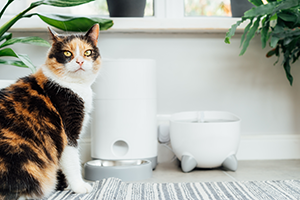
Increased noisiness can be especially disruptive at night and there are many reasons why a cat might yowl more after dark. It might be that they’re simply awake and bored during this period, or they may have got wind of potential mates or rivals in the vicinity. Offering pre-bedtime games, puzzle and catnip toys or timed feeders at night can help provide stimulation for a restless cat. Providing a secluded resting place away from the sight, sound or smell of other cats, coupled with a soothing pheromone spray, may ease territorial fears.
CDS is often associated with night-time cat yowling and changes to sleeping patterns. Meanwhile other health issues, such as declining vision, can also be a factor in nocturnal confusion and yowling, particularly in more senior cats.
If your older cat frequently yowls at night, make sure to feed them a highly-digestible meal before bedtime to ensure they're not hungry and try to help them expel extra energy during the day so that they feel more tired at night. Read our guide to help your cat get a better night’s sleep – and definitely consult a vet if it’s out of character.
“Never assume any changes seen in an elderly cat – such as more vocalisation – are just a side effect of ageing,” says Nicky. “Excessive nocturnal vocalisation in an elderly cat is a distress signal. So, if your cat’s behaviour changes unexpectedly like this, get them checked out by a vet.”