How to keep your cat active

Nicky Trevorrow - Article expert
Nicky Trevorrow
Behaviour Manager
Cats Protection
kitten playing with a feather stick
Regular play sessions are one of the simplest ways to support your cat’s long-term health and happiness. Whether your home is shared with a curious climber or a laid-back lounger, we’re here to help you find the right balance of cat exercise, play and mental stimulation.

Quick Links

From leaping onto furniture to sprinting down the hallway, these bursts of energy are how cats act on natural hunting instincts and stay mentally engaged.

Knowing how to channel that energy in the right way can make everyday life more enjoyable for both you and your cat. The right mix of play, routine and environment helps keep boredom at bay while supporting long-term health and wellbeing.

Below, we explore simple, practical ways to create a fun and active home environment, from choosing the best toys to keep cats active to building play experiences that keep them stimulated and content.

Physical activity is vital for developing your cat’s muscle and tendon tone, while also strengthening their bones and joints. Movement also provides a natural massage for internal organs and improves cardiovascular function, supporting healthy heart and lung function.

Physical activity also:

There’s no one-size-fits-all answer to this question, as your cat’s age, health and personality all play a part.

As a general guide, most adult cats benefit from 15–20 minutes of play-based exercise per day, broken into short sessions. Indoor cats may need slightly more, as they don’t have the same opportunities to explore or hunt.

Signs your cat may need additional activity include restlessness, frequent scratching, excessive vocalising or weight gain. Starting healthy routines early can make a lasting difference, as cats often slow down after their second birthday.

Unsure whether your cat is getting enough exercise? If you have cat insurance with Petplan, you can access our Pet Expert Chat via your My Petplan account to speak with a qualified professional about your cat’s weight, activity levels or behaviour.

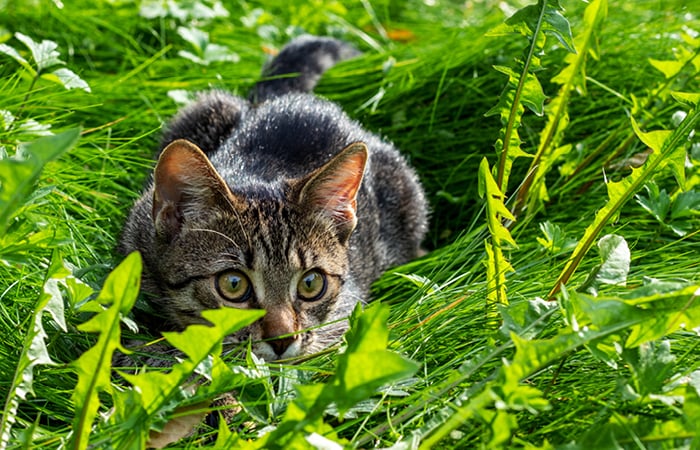
Have you ever watched your cat drop into ‘hunting mode’ while chasing a fishing rod toy or pouncing on a toy mouse? These adorable moments are a vital part of caring for their physical health, mental sharpness and emotional wellbeing.

Regular cat exercise, such as this, helps your cat stretch, run, jump and pounce in ways that feel natural and rewarding. It also plays a vital role in maintaining their weight and can help reduce unwanted behaviours, such as scratching furniture, or those driven by frustration.

While movement is essential for all cats’ wellbeing, you might be wondering how to keep an indoor cat active – and play is key here. Interactive playtime that mimics prey can make a real difference to a house cat’s enrichment. These moments give your cat a positive outlet for energy, help to ease stress and anxiety, and also strengthen the bond you share.

  1. Attach a feather or ribbon to a line on a pole and dangle it, increasingly moving it away from your cat so they can paw-fight and pounce on it. Avoid dangling a toy in your cat’s face, as prey never acts like that, and cats are slightly farsighted, so they can’t see that well close-up. Do let them regularly catch their false prey to release those all-important endorphins, which make your cat feel great.
  2. Gently throw scrunched-up paper or a couple of ping-pong balls for your cat to dart after and chase. For a more vigorous workout, try placing lots of them in a basket, then scattering them over the floor.
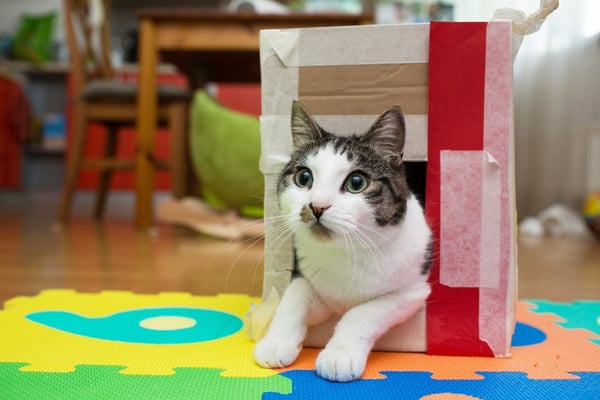
  3. Leave empty cardboard boxes on the ground for your cat to stalk, play hide-and-seek with, and generally chase around. Playing with fishing rod toys around cardboard boxes is lots of fun for you and your cat.

Cats are naturally most active at dawn and dusk, but short bursts of play spread throughout the day are ideal for keeping them feeling balanced and content. 

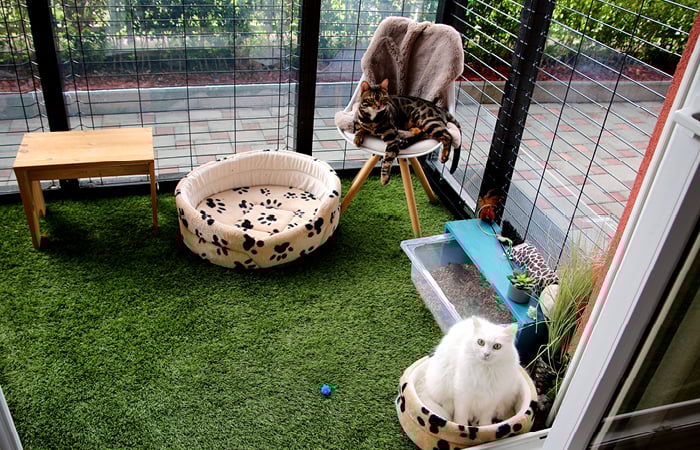
You can start by creating an environment that encourages movement. Think about scratching posts, cat trees, climbing shelves and raised perches that give your cat the freedom to jump, stretch and explore whenever they choose.

Experiment to learn your cat’s play style. Are they interested in toys darting across the floor, much like a mouse would, or do they find erratic movements in the air – similar to a moth or bird – more engaging? Or perhaps a game of ‘rabbit’ is more their style, where a kicker toy with quality catnip inside is wiggled to encourage your cat to grab with their front paws and bunny kick the toy with their back legs.

We recommend scheduling two to three short play sessions each day, using interactive toys that encourage chasing and pouncing. Rotating toys regularly also helps to keep playtime fresh and engaging. Just remember to read your cat’s body language to see when they are in the mood to play and to leave them alone when they are sleeping.

When it comes to cat exercise, finishing play sessions with food or a treat is an excellent way to mimic the hunt-eat-rest cycle that wild cats naturally follow.

It’s natural for energy levels to change as cats grow older, but gentle movement still matters.

You can support your senior cat by:

  • Choosing shorter, low-impact play sessions
  • Using softer toys and slower movements
  • Encouraging light stretching and gentle climbing

Always let your cat set the pace and watch closely for signs of discomfort. The goal is to help them stay mobile and comfortable, while continuing to enjoy shared moments of play.

The best toys to keep cats active tap into their instincts. Anything that encourages stalking, chasing and catching is likely to hold your cat’s attention.

Cat-specific toys are designed to withstand sharp claws and teeth. Popular choices include:

  • Feather wands, fishing rod toys and teaser toys
  • Crinkle balls and toy mice
  • Puzzle feeders that release treats
  • Tunnels and pop-up play cubes

Every cat is different, so don’t worry if it takes a little time to discover what works. Trying a few options will help you determine what your cat enjoys most and will keep playtime enjoyable.

Alongside play and attention, an enriching environment with scratching posts, climbing opportunities and cosy window perches helps keep your cat stimulated – even when you’re out of the house.

Found this article useful? Want to see similar content and engage with like-minded cat owners? Follow us on Petplan’s Facebook page.
Nicky Trevorrow - Behaviour Manager
Behaviour Manager

Nicky leads the development and implementation of behaviour-focused initiatives at Cats Protection, ensuring that policies and strategies support the highest standards of cat welfare across the charity’s volunteer teams and centres.

She is passionate about educating others on the connection between behaviour and cat wellbeing, particularly in a shelter environment. Nicky also provides guidance to adopters, helping them understand their cat’s behaviour and fostering successful pet-owner relationships to reduce cats being returned to the charity.

Her academic background includes a BSc in Animal Behaviour from Anglia Ruskin University and a Postgraduate Diploma in Companion Animal Behaviour Counselling from the University of Southampton. Before joining Cats Protection in 2010, she worked as a registered veterinary nurse. Nicky is actively involved in the field, representing the charity on the Animal Behaviour and Training Council (ABTC), contributing to International Cat Care’s feline wellbeing panel, and holding full membership with the Association of Pet Behaviour Counsellors (APBC).

Follow us

Petplan is a trading name of Pet Plan Limited (Registered in England No. 1282939) and Allianz Insurance plc (Registered in England No. 84638), Registered office: 57 Ladymead, Guildford, Surrey GU1 1DB.

Pet Plan Limited is authorised and regulated by the Financial Conduct Authority. Financial Services Register No. 311969. Allianz Insurance plc is authorised by the Prudential Regulation Authority and regulated by the Financial Conduct Authority and the Prudential Regulation Authority. Financial Services Register No. 121849. Pet Plan Limited is a subsidiary of Allianz Insurance plc.