
If your cat could rate your home, would you get a five-star review? Whether you’ve recently welcomed a new kitten or cat, or you’d like to make things more comfortable for your senior cat, there’s plenty of simple steps you can take to create a more feline-friendly environment.
How to make your home cat-friendly
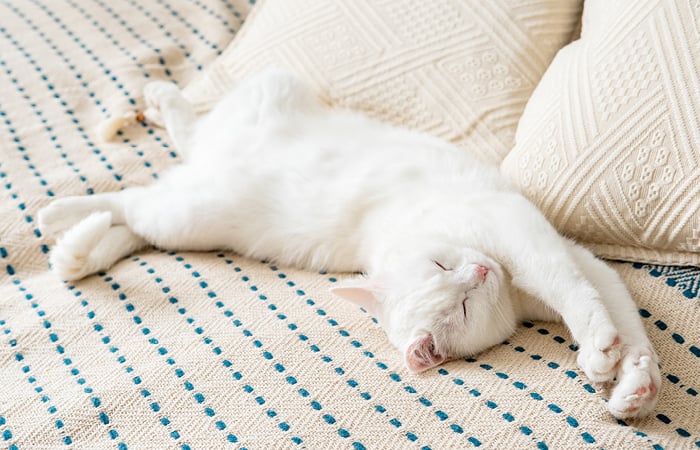
Do you have a cat-friendly home? Here’s what you need to know about creating a safe and comfortable space for your cat.
Quick Links
What do cats need to be happy?
Before improving your home, it’s important to check you’re providing everything your cat needs to be happy and comfortable, including:
- A safe, comfortable environment: Cats need space to play, explore and interact with their families. They also need quiet areas where they can sleep or rest undisturbed.
- Mental and physical stimulation: Opportunities to exercise their bodies and minds are essential for cats.
- Nutritious food and water: Cats need consistent access to a high-quality diet plus constant access to clean, fresh water.
- The ability to express natural behaviours: Climbing, scratching, exploring and hunting are all instinctive behaviours your cat needs to express.
- Vet care: Routine checkups for vaccinations and parasite control, plus emergency vet care when required.
If you have any questions about your cat’s wellbeing – and have cat insurance with Petplan – you can access our Pet Expert Chat to speak with vet experts, 24/7. Just log in to your My Petplan account and head to the MySupport area to access
How to make your home cat-friendly
Some cats love hanging out with their families, while others may prefer to spend time on their own. By making sure your entire house is cat-friendly, your cat has the freedom to choose the places they like best.
When adapting your home, here are some things to keep in mind.
Create safe spaces for cats
It’s important to provide a safe space for cats to rest, sleep or just to watch what’s going on. Aim to provide:
- A warm bed in a quiet corner
- Hiding spots, such as elevated perches or a covered cat bed
- Somewhere your cat can escape from guests, people and other pets
If possible, give your cat a few options in different areas, including the lounge, bedroom and kitchen. Once you’ve created your cat’s safe spaces, you can move on to the rest of the house.
Cats in the bedroom
Cats love to climb, so if you haven’t provided something suitable, they may shimmy their way up your curtains or jump up onto shelves.
To avoid this, make sure your cat has plenty of places to climb and sit up high – cat trees are great for this. Many cat trees also include a scratching post, which also gives your cat somewhere to stretch their muscles and clean their claws. Wall-mounted perches and hammocks can also offer a safe spot for your cat to relax.
If your cat has been scratching the furniture, place a scratching post or panel close by, and encourage them to use this instead. Try sprinkling it with catnip or using a fishing rod toy to guide them towards the scratch post.
If you spend a lot of time in the lounge, this is a great place to keep your cat’s toys and activities. Store them in a secure box, and vary what you leave out to prevent your cat from getting bored.
Avoid candles, which curious cats might knock over. Diffusers can also be dangerous, especially with essential oils such as peppermint, citrus or tea tree, which are harmful to cats. Cats also dislike air fresheners – especially those which make a ‘psst’ noise, as this can sound like hissing to them. Instead, stick to cat-friendly home scents such as a cat pheromone diffuser. You might not be able to smell it, but your cat will appreciate it.
Cat-proof your kitchen
Always keep cupboard and appliance doors closed, and check for a napping cat before switching on your washing machine, tumble dryer or oven. If you have a kitten or adventurous adult cat, blocking up gaps under cupboards and around appliances means they can’t squeeze in and get stuck.
Store cleaning products out of harm’s way, so your cat can never accidentally knock them over. After cleaning, wipe down surfaces with water to remove any residue.
Dispose of leftovers in a secure bin, and remember that many foods such as onions, grapes and chocolate can be harmful to cats. If your cat learns to open cupboard doors and drawers, use child locks to keep food and cleaning products off limits
Make dining areas safe for cats
The best place to feed your cat is a room with a tiled floor, in case of any spills. If that’s not possible, a feeding mat can keep any mess to a minimum.
It’s important to place your cat’s food, water bowls and litter trays as far apart from each other as possible. Ideally, these should be in separate rooms, but if that’s not possible, aim for at least two metres between each resource. Avoid placing litter trays in busy areas, such as hallways, or overlooked areas such as by the cat flap or in a conservatory.
If you have multiple cats, make sure they each have their own food bowl, water bowl and litter tray, plus one spare. So if you have two cats, you’ll need three of each resource, spread out throughout the house.
Remember you don’t always have to put your cat’s food in a bowl. Puzzle feeders are a great way to keep your cat entertained and stimulate their natural instincts – and it’s easy to make your own.
Cats in the bedroom
Many catslove hanging out in bedrooms. It’s quiet, it smells of you and is full of cosy sleeping spots. Keep a warm, sunny windowsill clear and your cat will watch the world go by for hours. If your cat lives indoors, a cat-proof window screen means you can leave windows ajar without worrying about them escaping.
If the top of your wardrobe is accessible, this can be a good spot for a high-level hideout. Place a soft blanket, cushion or cat bed up there so your cat stays comfortable. Just ensure they can easily get down again, too. Placing lower furniture nearby can help with access.
If you haveallergies or don’t want cats in the bedroom, keep the door consistently closed. Make sure your home includes plenty of other cosy sleeping places and quiet hiding spaces. If you have very young children, it’s also best to limit your cat’s access to the nursery or children’s bedrooms
Cat-safe bathrooms
Bathrooms can be a surprisingly popular cat hangout – the cool floor tiles, ceramic sinks and empty baths provide refreshing spots for your cat to retreat to, especially in summer.
While most cats might not enjoy taking a bath, they’re often intrigued by the sight and sound of running water. Some breeds, such as Maine Coons and Norwegian Forest Cats, may even enjoy playing in water, so the bathroom might become their favourite place to relax.
Just remember to keep the toilet seat down when you’re not around. This removes any temptation for your cat to drink the water (which is dangerous if you’ve used cleaning products), lick a toxic rim block, or take an ill-advised dive.
Feline-friendly home offices
Cats plus office equipment can sometimes equal chaos. If you’ve got your own home working space, it might be a good idea to keep it off limits when you’re not around to supervise.
If that’s not practical, make things as cat-friendly as possible with our tips for working from home with your cat. Remember to switch everything off when you’ve finished working and close your laptop – unless you want your last document of the day to be edited by your cat.
Found this article useful? Want to see similar content and engage with like-minded cat owners? Follow us on Petplan’s Facebook page.
Related articles







Follow us

Petplan is a trading name of Pet Plan Limited (Registered in England and Wales with company number 1282939) and Allianz Insurance plc (Registered in England and Wales with company number 84638).
Pet Plan Limited is authorised and regulated by the Financial Conduct Authority. Financial Services reference number 311969. Allianz Insurance plc is authorised by the Prudential Regulation Authority and regulated by the Financial Conduct Authority and the Prudential Regulation Authority, reference number 121849. Registered address: 15 Bishopsgate, London, EC2N 3AR.