Why do cats hunt?

Nicky Trevorrow - Article expert
Nicky Trevorrow
Behaviour Manager
Cats Protection
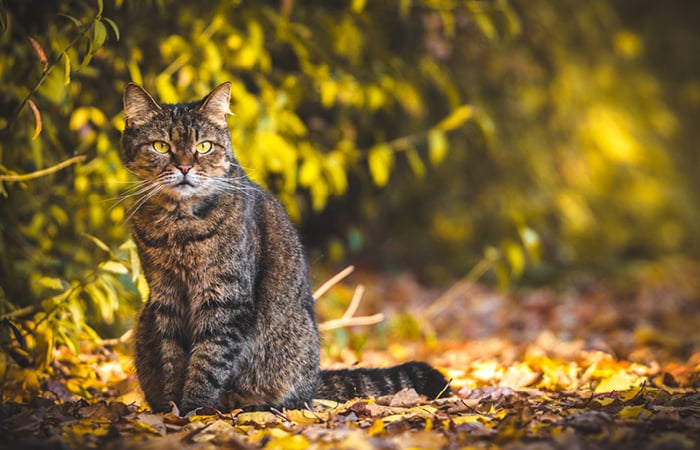
cat hunting in a garden
Hunting is part of what makes cats, cats. In this guide, we explore why cats hunt, what they’re communicating through sounds and body language, and how you can support their instincts in a simple, kind way.

Quick Links

Have you ever watched your cat freeze, focus, then spring into action in the garden – or even ‘hunt’ a toy in your living room? It’s an entirely natural part of cat behaviour, driven by instinct rather than hunger.

That said, it isn’t always easy to live with. Discovering unwanted ‘gifts’ or cleaning up after a successful hunt can feel unsettling. But the good news is that your cat’s drive to stalk and pounce doesn’t have to play out in real life. By offering plenty of opportunities for predatory play, you can help satisfy this instinct in a safe, enriching way.

Read on to explore why cats hunt, what their behaviour and body language can tell you, and how you can gently guide those instincts in ways that work for you both.


Cats don’t only hunt for food. Hunting is an instinctive behaviour that’s rewarding for cats, providing them with physical exercise, mental stimulation and a way to flex skills their ancestors relied on. That’s why a cat with a full food bowl may still stalk leaves, pounce on shadows or patrol the garden like it’s their personal mission.

Hunting can also be a form of enrichment. The ‘stalk, chase, pounce’ sequence gives cats an outlet for energy and can help prevent boredom – especially for indoor cats.

So, why do cats hunt mice, voles, small birds and insects? In simple terms, evolution, opportunity, size and movement all play a role. Cats have evolved to hunt small rodents, and their whole biology reflects this, having not changed for thousands of years.

Small mammals are common in many gardens and green spaces, and their quick, darting movements trigger a cat’s chase response. Prey that’s easy to catch – or easy to spot – is more likely to become a target.

You might also notice your cat seems to practise on slower-moving targets (like beetles) or spends a lot of time watching a single area. That still fits the pattern: scanning, listening and waiting are all part of the hunting sequence.

Cats are naturally more active around dawn and dusk, and many will use quiet, low-traffic hours to roam, patrol and hunt, as this is typically when their prey is most active.

Fewer people, fewer cars and less noise can make it easier to detect movement and sounds outdoors. And if you’ve ever tried to sleep while your cat launches into a 2am ‘zoomies’ session, you’ll know they can be full of energy then, too.

Noticed your cat staring at a bird and making that quick ‘ek-ek-ek’ sound?

Cat chattering is commonly linked to excitement, frustration or a surge of adrenaline. Cats usually stay quiet when they have a real chance of catching prey, but may chirp or chatter when there’s a barrier, such as a window, in the way.

In this way, it’s often less ‘hunting strategy’ and more emotional overflow, clueing you into the fact that your cat is intensely focused and wired for action.

If you’ve noticed a slow, deliberate tail flick while your cat stalks, you’re picking up on classic hunting body language. 

The reasons why cats swish their tails when hunting can vary, but it often shows focus and rising excitement. The rest of the body may look still, but an active tail can be a ‘tell’ that your cat is locked on and ready to pounce. It can also show irritation in other situations, so context matters.

Finding a ‘gift’ on the doorstep can be upsetting, especially if you love wildlife. But bringing prey back to a safe environment before eating it is natural behaviour for cats – and can even suggest your cat feels secure at home!

Ambushing feet, pouncing on hands, or launching surprise ‘attacks’ from behind the sofa are common cat behaviours. 

In most cases, this isn’t actual aggression – it’s play-hunting. Your cat is practising chase-and-pounce behaviour, often because they’re full of energy, overstimulated or missing regular interactive play.

Many cats have been inadvertently played with in this way as a ‘fun game’ when they were kittens, but of course, it tends to hurt more once they grow up! Instead, always use kitten-safe toys and never teach kittens to use fingers and toes as part of a game.

If this sounds familiar, try:

  • Two short play sessions daily with a wand toy (so hands aren’t the target)
  • Puzzle feeders or treat hunts around the home
  • Ending play with a kicker toy and then a small snack to help your cat switch off afterwards

If problematic behaviour escalates, contact your vet in the first instance. Alternatively, if you have cat insurance with Petplan, you can also use our Pet Expert Chat feature to speak with a qualified professional about your concerns. Just log in to your My Petplan account to access this.

If your cat brings prey home, it’s important not to punish them. Hunting is instinctive, and reacting strongly can cause stress without stopping the behaviour. Staying calm is the best response.

If the animal is dead, remove it safely using gloves, double-bag it and place it in your household waste bin, then wash your hands thoroughly. For larger animals, contact your local authority for advice.

If the animal is alive, move your cat into another room and give the animal a clear route to the outside. Once it’s gone, keeping your cat indoors for a short time can help reduce the chance of the animal being caught again.

If you want to reduce hunting, the kindest approach is usually redirection. It isn’t advisable to try to stop hunting altogether, as this doesn’t work, but you can channel that instinct into play and other outlets.

Original research from Science Direct shows that regular interactive play sessions and a high-protein diet can help reduce hunting behaviour. Try food puzzles, hunt-style play indoors using wand toys, and short ‘stalk and chase’ sessions that end with a small snack as a reward. Keeping to predictable playtimes can also help cats feel secure and satisfied.

Hunting is a natural part of being a cat, even for well-fed and well-cared-for pets. While it can sometimes feel challenging, understanding why your cat hunts makes it easier to respond appropriately.

By offering regular play, mental stimulation and safe outlets for predatory behaviour, you can support your cat’s instincts, keep them happy, and, where possible, protect local wildlife.

Found this article useful? Want to see similar content and engage with like-minded cat owners? Follow us on Petplan’s Facebook page.
Nicky Trevorrow - Behaviour Manager
Behaviour Manager

Nicky leads the development and implementation of behaviour-focused initiatives at Cats Protection, ensuring that policies and strategies support the highest standards of cat welfare across the charity’s volunteer teams and centres.

She is passionate about educating others on the connection between behaviour and cat wellbeing, particularly in a shelter environment. Nicky also provides guidance to adopters, helping them understand their cat’s behaviour and fostering successful pet-owner relationships to reduce cats being returned to the charity.

Her academic background includes a BSc in Animal Behaviour from Anglia Ruskin University and a Postgraduate Diploma in Companion Animal Behaviour Counselling from the University of Southampton. Before joining Cats Protection in 2010, she worked as a registered veterinary nurse. Nicky is actively involved in the field, representing the charity on the Animal Behaviour and Training Council (ABTC), contributing to International Cat Care’s feline wellbeing panel, and holding full membership with the Association of Pet Behaviour Counsellors (APBC).

Follow us

Petplan is a trading name of Pet Plan Limited (Registered in England No. 1282939) and Allianz Insurance plc (Registered in England No. 84638), Registered office: 57 Ladymead, Guildford, Surrey GU1 1DB.

Pet Plan Limited is authorised and regulated by the Financial Conduct Authority. Financial Services Register No. 311969. Allianz Insurance plc is authorised by the Prudential Regulation Authority and regulated by the Financial Conduct Authority and the Prudential Regulation Authority. Financial Services Register No. 121849. Pet Plan Limited is a subsidiary of Allianz Insurance plc.