
Stroking your cat can be a soothing way to bond, but each cat has their own preferences. Taking the time to learn which strokes they enjoy can make the experience more enjoyable for both of you. You may discover that they love certain spots, while others are off-limits...
Why do cats like being stroked?
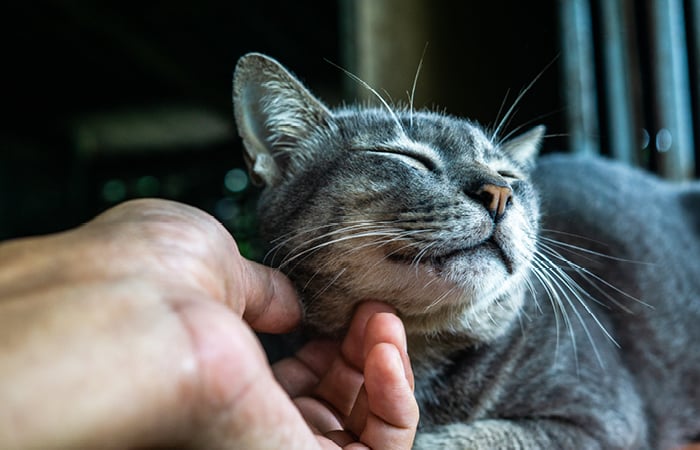
Stroking your cat is a great way to build a strong bond, but why do cats like being stroked? Here’s everything you need to know, including how to stroke your cat and the best spots to focus on.
Quick Links
Why do cats like being stroked?
Bonded cats that live in a close social group often engage in mutual grooming, also known as allogrooming. This often involves nuzzling and rubbing against each other. While this can look like an adorable display of affection, the real purpose of this behaviour is to transfer pheromones between one another, creating a group scent and a sense of belonging.
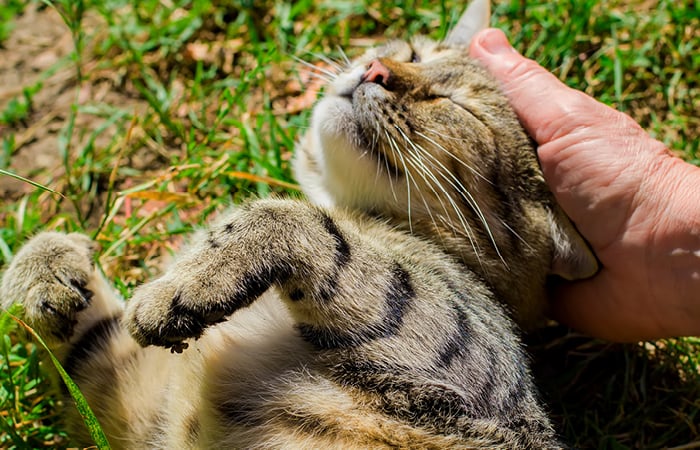
But the pleasure of being stroked goes beyond scent transference. Stroking your cat can release endorphins – feel-good hormones – which help your cat feel calm and relaxed. Cats also have a lot of nerve endings in the spots they enjoy being stroked – so it probably just feels good too!
Why do cats like being stroked on the head?
Cats have scent glands on their cheeks and forehead. When you stroke them on these areas of their head, their pheromones are transferred to you, reinforcing that you’re part of their social group. This area is also difficult for your cat to groom, so it can feel extra nice.
Why do cats like being stroked under their chin?
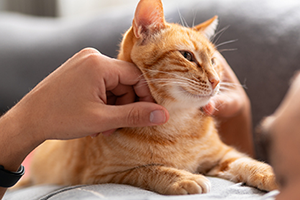
Just like the rest of their heads, cats have a lot of scent glands and nerve endings under their chins, making this a favourite spot for strokes and scratches.
How to stroke a cat
Use these tips to pet your cat and discover their favourite spots:
- Always let your cat approach you first
- Extend your hand to check if your cat wants to make contact
- Stroke your cat in the direction their fur grows
- Check if your cat wants you to continue – purring and kneading are positive signs, and some cats may even dribble when they’re particularly enjoying it
- Stay alert to your cat’s body language and watch out for signs – such as tail twitching or flattened ears – that signify they’ve had enough and are becoming overstimulated
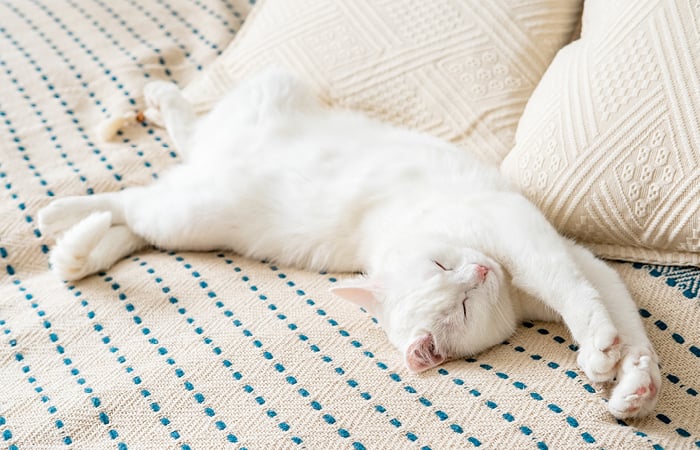
If your cat rolls over while being stroked, it may look like an invitation to tickle their tummy. But exposing their abdomen is a sign offeeling comfortable in your company. Most cats don’t enjoy belly rubs, so stick with a scratch under their chin or a tickle on their cheeks instead.
Carefully supervise the interactions between cats and children. Teach them the importance of letting the cat approach them, and show them how to offer their hand to see if your cat wants to be stroked
Where to stroke your cat
The parts of the body cats are most likely to groom or nuzzle are those with the highest concentration of scent glands, including:
- Forehead (temporal glands)
- Top of the head (pineal glands)
- Cheeks (cheek glands)
- Around the mouth (perioral glands)
- Under the chin (submandibular glands)
- Base of the tail (supra-caudal glands) – but not for all cats!
Most cats also enjoy being stroked around these areas:
- Neck
- Chest
- Shoulders
- Behind the ears
- On the top of their back
Where to avoid stroking your cat
Cats typically don’t enjoy being stroked in these areas:
- Tail
- Belly
- Bottom
- Legs and paws
When to avoid stroking your cat
Cats don’t always want to be stroked – sometimes even the cuddliest cat isn’t in the mood. If your cat is stressed, anxious or distracted, it’s best to leave the strokes for another time.
Keep an eye on your cat’s body language and watch out for these tell-tale signs that your cat doesn’t want to be stroked:
- Tense body
- Twitching tail
- Flattened ears
If you’re not sure when to stroke your cat, let them set the pace. If they approach you looking for affection, give them a quick stroke for around three seconds. If they walk away, they’ve probably had enough, but if they keep coming back for more, stroke them for another three seconds.
Why doesn’t my cat like being stroked?
Every cat is different, and some would rather not be stroked at all. One factor that can impact this is how much human socialisation they received as a kitten. A kitten who has had lots of positive socialisation experiences with lots of different people will often be a confident and sociable adult cat.
The health benefits of cat stroking
Stroking your cat isn’t just abonding experience; it can also offer some health benefits. Research shows that interacting with a cat for just 10 minutes can reduce our levels of cortisol, a stress hormone. It’s also thought that stroking a cat can lower your blood pressure.
If your cat does love being stroked, this is also a great time to detect potential health issues like fleas, skin conditions or injuries. If you do notice any unusual bumps or lumps, ask your vet for advice. If you have cat insurance with Petplan, try our free Pet Expert Chat feature to connect with vet professionals and ask any health-related questions. Just log in to your My Petplan account and go to theMy Support area to access.
Found this article useful? Want to see similar content and engage with like-minded cat owners? Follow us on Petplan’s Facebook page.
Related articles






Follow us

Petplan is a trading name of Pet Plan Limited (Registered in England and Wales with company number 1282939) and Allianz Insurance plc (Registered in England and Wales with company number 84638).
Pet Plan Limited is authorised and regulated by the Financial Conduct Authority. Financial Services reference number 311969. Allianz Insurance plc is authorised by the Prudential Regulation Authority and regulated by the Financial Conduct Authority and the Prudential Regulation Authority, reference number 121849. Registered address: 15 Bishopsgate, London, EC2N 3AR.