
Keeping your cat indoors is often the safest option, but they can miss out on the physical and mental stimulation of being outdoors. Here are seven ways to recreate outdoor experiences for indoor cats.
Bringing the outdoors in for your inside cat

Indoor cats still need to express their natural behaviours. Use these seven tips to create an outdoor experience with plenty of mental and physical enrichment.
Quick Links
1. Add a water fountain
Cats with access to the outdoors usually prefer to drink from moving water sources or puddles, often choosing these over their clean bowls of tap water. Recreate these opportunities for your indoor cat by giving them a water fountain. The movement can encourage your cat to drink more, keeping them hydrated and helping to reduce the risks of health issues such as urinary tract infections.
Many cats prefer running water, often enjoying a drink from a dripping tap. Others may favour filtered water and are more likely to drink from ceramic or glass bowls, which don’t taint the taste of the water like some plastic or metal bowls can. To encourage your cat to drink more, consider exploring different water bowl options to determine their favourite.
Cats prefer their water bowls to be away from their food bowls and litter trays. Some feel safer if their bowl is slightly away from the wall so they can have their back to the wall and face the room to see if anything is coming (having their head down to drink can make them feel more vulnerable, so feeling safe is key).
2. Add indoor plants (that are not toxic to cats)
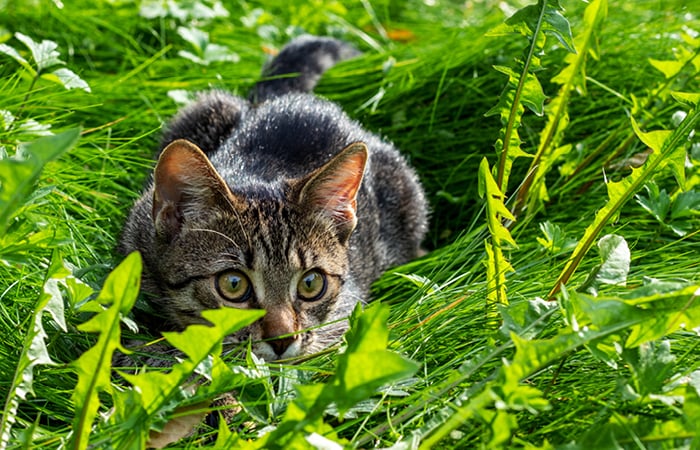
Outdoor cats can often be seen nibbling or chewing on grass. While the explanation for this behaviour is unclear, it’s thought that cats eat grass as a digestive aid, for nutrition, to break down hairballs, or to help purge parasites. Some cats might also eat grass simply because they enjoy it!
Adding a small pot of ‘cat grass’ to your home is a great way to let your indoor cat satisfy this instinctive behaviour. Available in pet stores and online, the seeds are easy to grow and can be replaced with a fresh tray once your cat has nibbled it all.
Adding a few cat-safe indoor plants can provide interest and mental stimulation. Indoor plants that are not toxic to cats include:
- Hibiscus
- Bamboo
- Money tree
- Spider plant
- Herbs, such as basil, sage and rosemary
Avoid poisonous plants such as hyacinths and poinsettias, which may cause your cat to become ill if they eat or chew them, and definitely avoid lilies, which are toxic to cats and can be fatal.
If you’re concerned your cat has eaten a poisonous plant, speak to your vet for advice straight away. If you have cat insurance with Petplan, you can also access our free video chat feature, Pet Expert Chat, to connect with professionals, 24/7. Simply log in to your My Petplan account and head to the My Support area.
3. Provide scratching posts and vertical spaces
Behaviours such as scratching and climbing are natural for cats, so it’s important to provide places for your indoor cat to carry these out, too. Look for vertical scratching posts with vertical thread (as opposed to horizontal rope or sisal wrapped around) as this feels best under their claws when scratching. Some cats also enjoy scratching horizontal surfaces, so a cardboard scratch pad is a good idea, too.
Cats love to hide up high, so make sure your indoor cat has places to climb. A cat tower can combine scratching surfaces, opportunities to climb and places to nap at height. If your cat or kitten hasn’t used one of these before, introduce it slowly and train your cat to use it.
The average-sized moggy needs a scratching post that’s at least 60cm tall. If you have a large breed of cat, such as a Maine Coon or Norwegian Forest Cat, they’ll need a taller, stable scratching surface that allows them to stretch out fully. Kittens don’t require ‘kitten posts’ as they are excellent climbers (just think about how they scale the curtains with ease!), so invest in a decent one for adult cats.
4. Let your indoor cat watch the world go by
Cats love to sit and watch what’s going on around them, so set up a space for your indoor cat to do just that.
Find a sunny spot and add a window perch where they can sunbathe and watch the outside world. This offers plenty of mental stimulation and helps mimic the experience of being outside.
5. Buy some outdoor-themed toys
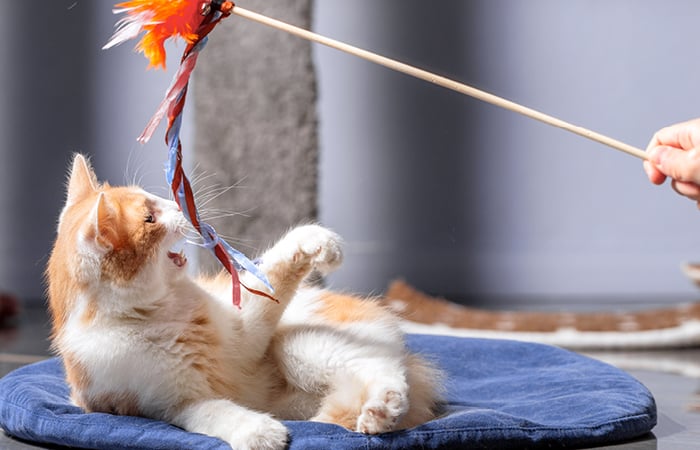
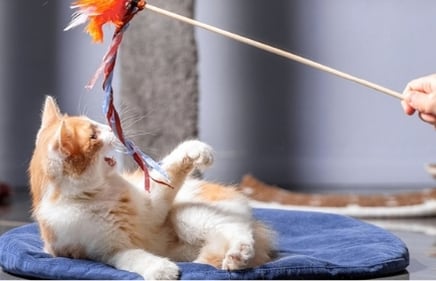
While outdoor cats get to use their natural hunting instinct regularly, it’s not always as easy for indoor cats. Keep yourindoor cat entertained and active by choosing interactive toys that mimic the movement of birds, insects or rodents, e.g. fishing-rod toys. Set aside some time to play with your cat, helping them get physical exercise and mental stimulation at the same time. Choose toys your cat can play with independently too, such as kicker toys or puzzle feeders.
6. Introduce new scents
Offering your indoor cat a range of smells can help reduce boredom and mimic the scents they might encounter outside. Simply opening the window – while ensuring your cat can’t escape – can allow fresh air to circulate and introduce interesting odours.
You can also occasionally try offering your cat something new to smell – just make sure it’s non-toxic. Some ideas include:
- Catnip
- Leaves
- Cat grass
- Small twigs
- Feathers
- If you have a healthy, vaccinated rabbit, you could gently stroke the rabbit with a cloth to pick up the scent and then let your cat sniff it
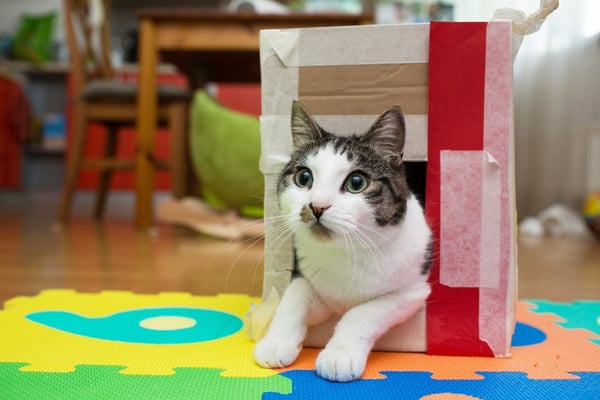
Creating scent-filled DIY cat toys, like a cardboard treat holder or an old box filled with leaves and treats, can also offer new scents and plenty of mental stimulation. Supervise your cat and remove these toys when you’re not around.
7. Create a catio
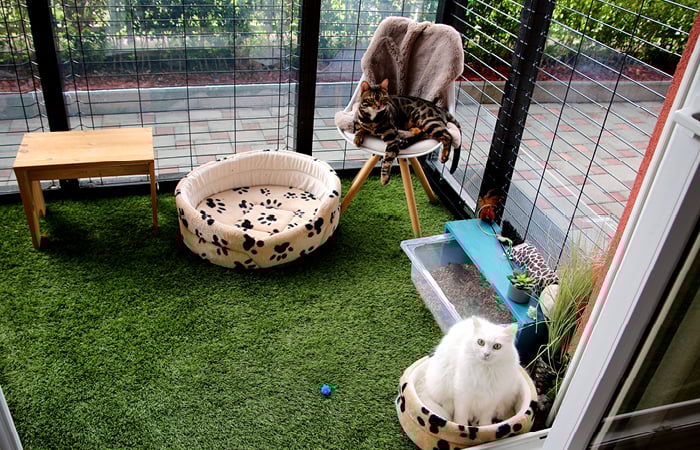
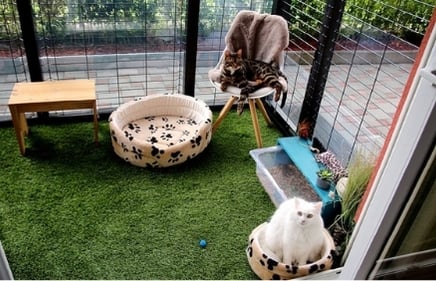
If you have the space and budget, creating a secure catio, or cat patio, can allow your indoor cat to safely experience the fresh air and sunshine. This can be as simple as a small DIY enclosure attached to a window, to a comprehensive catio with tunnels, climbing shelves and ramps.
Found this article useful? Want to see similar content and engage with like-minded cat owners? Follow us on Petplan’s Facebook page.
Related articles



Follow us

Petplan is a trading name of Pet Plan Limited (Registered in England and Wales with company number 1282939) and Allianz Insurance plc (Registered in England and Wales with company number 84638).
Pet Plan Limited is authorised and regulated by the Financial Conduct Authority. Financial Services reference number 311969. Allianz Insurance plc is authorised by the Prudential Regulation Authority and regulated by the Financial Conduct Authority and the Prudential Regulation Authority, reference number 121849. Registered address: 15 Bishopsgate, London, EC2N 3AR.