The ultimate guide to healthy rabbits

Brian Faulkner - Article expert
Brian Faulkner
Veterinary Surgeon
RCVS Registered
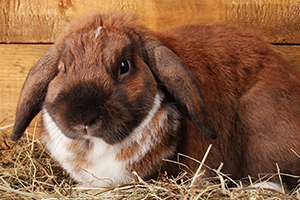
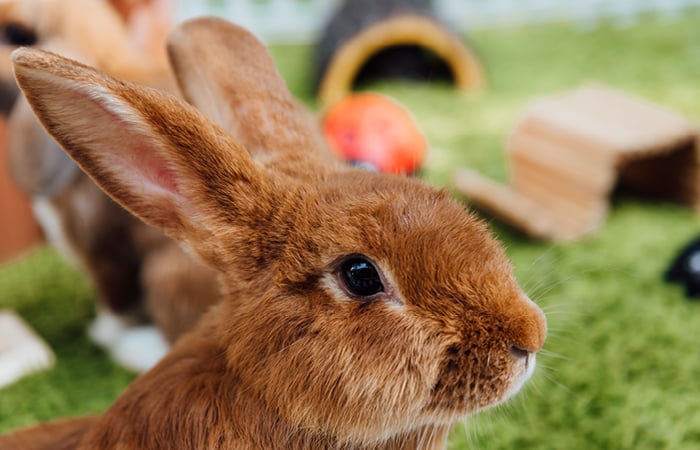
a brown and white rabbit sat on straw in a hutch
Healthy rabbits have plenty of space to run around, a nutritious diet, and lots of furry companionship to keep them happy. Read on for more must-know tips for taking care of your bunnies.

Quick Links

Whether you have a pair of bunnies hopping about in your garden or are thinking of welcoming more rabbits into your home, you may be wondering how to keep these intelligent and active animals happy throughout their lives.

Although rabbits are often seen as lower-maintenance than dogs or cats, they require just as much dedication, coming with their own unique set of needs that every rabbit owner should understand.

On average, rabbits live between 8 to 12 years, and with the right care, they remain energetic and curious throughout their lives. Healthy rabbits need a balanced combination of a nutritious diet, regular exercise and mental stimulation to enjoy a long, happy life.

To help you provide the best care for your pets, we’ve compiled some essential tips to help keep your furry friends thriving.

The Rabbit Welfare Association & Fund (RWAF) has a simple but important saying: ‘A hutch is not enough’. Providing a permanent run that’s at least 2m x 3m (6ft x 10ft) with a height of 60cm (24in) ensures good rabbit health. As a general rule of thumb, bunnies should have enough room to rear up, jump and stand on their hind legs to ‘periscope’.

These activities help to stretch the muscles in your bunnies’ backs, preventing aches and pains, and even spinal damage. A spacious permanent enclosure also allows your rabbits to be alert and active at both dusk and dawn, which is how they would naturally behave in the wild.

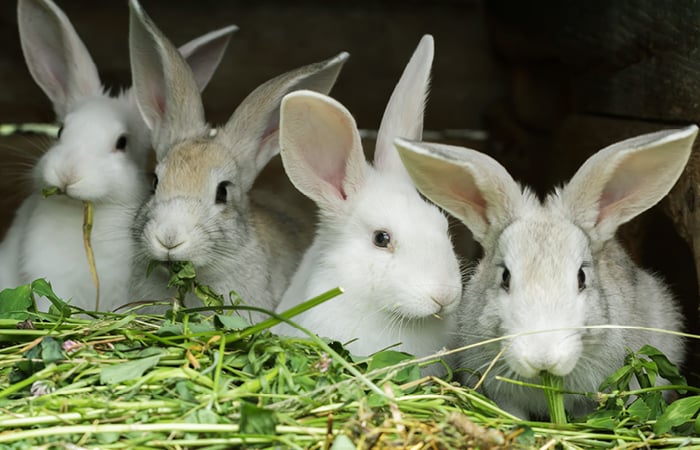
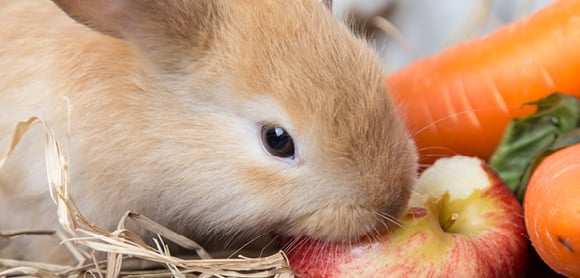
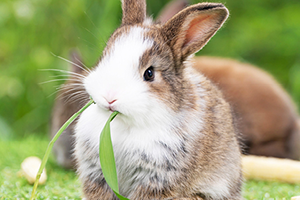
Grass and hay should make up the bulk of a healthy rabbit's diet – roughly 80-90% of what they eat each day. These provide the essential fibre that keeps their digestive system running smoothly. Along with hay, you can offer a small handful of fresh leafy vegetables daily, such as parsley, sprouts and celery leaves, making sure to wash them thoroughly beforehand.

Pellets should only make up around 5% of their diet. Unlike mixed kibble, pellets ensure your rabbit gets the right amount of calcium with each bite. With mixed kibble, fussy rabbits tend to pick and choose, often leaving behind the calcium pellets, which can lead to dental issues over time.

When your rabbits are out in the garden, let them munch on plenty of fresh grass. They may also enjoy herbs such as basil and coriander, as well as safe weeds like nettle and clover. Just make sure to keep an eye out for potentially toxic plantssuch as foxglove, poppies and rhubarb.

While fruits and vegetables are a delicious treat, they are high in sugar so should always be fed in moderation for good rabbit health.


Foraging and working for their food mimics how healthy rabbits eat in the wild, keeping them mentally stimulated. Try giving your bunnies their pellets in a feeding ball that can be nosed around on the ground. Similarly, greens can be chopped up and hidden inside clean plant pots, or pegged to the top of the enclosure so your rabbits have to reach up to eat it.

Also, hay can be presented in lots of exciting ways – stuff it into an unused hanging basket attached securely to the roof of the enclosure, or pack it into wicker tunnels, cardboard tubes or cardboard boxes with a hole at each end.

Rabbits are curious animals that love to dig, burrow and hide. Providing safe spaces – such as with empty boxes and tunnels – allows them to express their natural behaviours while staying physically and mentally fit.

Large, strong cardboard boxes can be climbed on using secure wooden ramps, and a hole in the side turns a box into a bolt-hole. Use clean plastic tubing with smooth edges to create tunnels, and give your rabbits somewhere to hide by placing large plastic plant pots on their sides, with bricks at either side to stop them rolling over. Remember to supervise your bunnies when they’re playing with homemade games and toys.

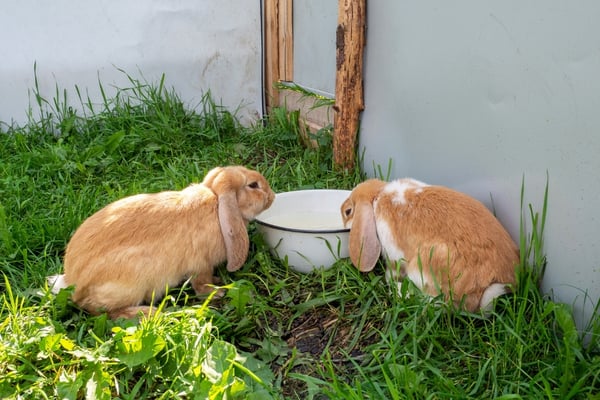
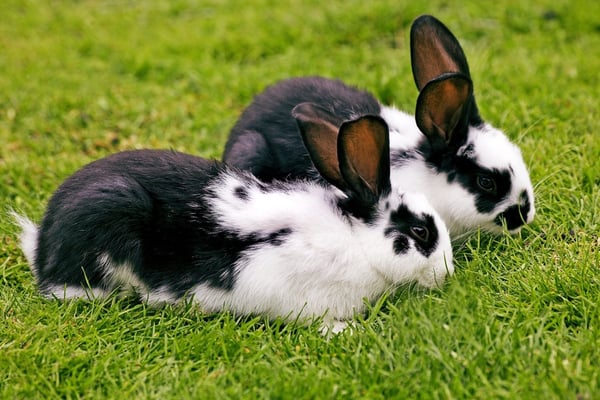
In the wild, healthy rabbits live in warrens with hundreds of others, so needless to say they love company. Ideally, pet rabbits should live in pairs or groups – the best combination being a neutered male with a spayed female.

Pairing two rabbits together to form a bond isn’t always instant. You will need to take the time to carefully and gradually get them used to each other, which can sometimes take as long as a couple of months. But once a bond between two rabbits has been established, they become inseparable – grooming each other, eating together and sleeping side-by-side.

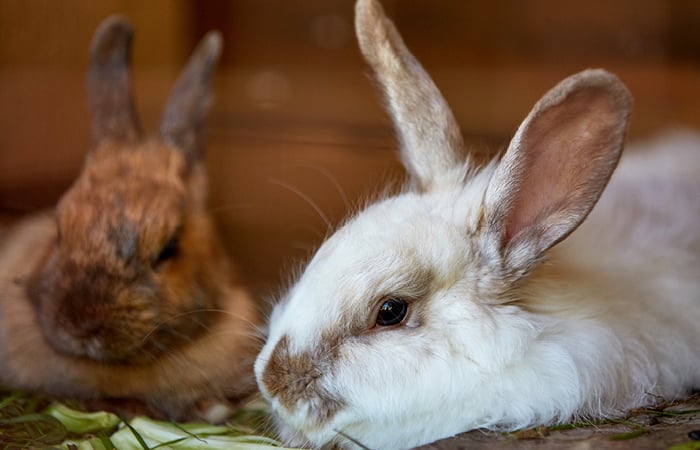
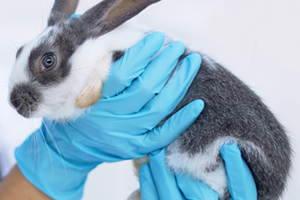
Healthy rabbits have a clean and dry nose, ears, tail and bottom. When checking your rabbits, look out for any snuffles or patches of red, sore skin that may indicate a problem.

You can keep an eye on your bunnies’ weight through body condition scoring, a system used to assess the health of rabbits, to help prevent any weight-related health problems cropping up. If you have rabbit insurance with Petplan, you can access our Pet Expert Chat by logging into your My Petplan account and heading to the My Support area to speak to a professional about your rabbits’ weight.

When it comes to rabbit health, regular vaccinations protect from two painful and potentially fatal diseases: myxomatosis and rabbit viral haemorrhagic disease (RVHD).

Both diseases affect indoor and outdoor bunnies, so it’s important to have your rabbits vaccinated when they’re young – from five weeks of age – and to keep them updated with yearly booster shots.

Found this article useful? Want to see similar content and engage with like-minded rabbit owners? Follow us on Petplan's Facebook page
Brian Faulkner - Article expert
Petplan Vet Expert

Brian is a long standing vet and President of the UK Society of Practising Veterinary Surgeons. He's worked in more than 250 veterinary practices as a clinician, consultant and confidence coach. Brian holds several academic positions, is a keynote speaker and the founder of Colourful CPD, and organisation providing training for veterinary practices.

Brian co-writes our articles on pet health, where we cover everything from common conditions to supporting your pet after an operation.

Find out more about Brian

Follow us

Petplan is a trading name of Pet Plan Limited (Registered in England No. 1282939) and Allianz Insurance plc (Registered in England No. 84638), Registered office: 57 Ladymead, Guildford, Surrey GU1 1DB.

Pet Plan Limited is authorised and regulated by the Financial Conduct Authority. Financial Services Register No. 311969. Allianz Insurance plc is authorised by the Prudential Regulation Authority and regulated by the Financial Conduct Authority and the Prudential Regulation Authority. Financial Services Register No. 121849. Pet Plan Limited is a subsidiary of Allianz Insurance plc.