
Looking for ways to show your dog that you love them? Whether exploring a new walk together, arranging a doggy playdate orteaching them a new trick, these activities will help to strengthen your bond and keep your dog happy
How to show your dog you love them
Expert approved

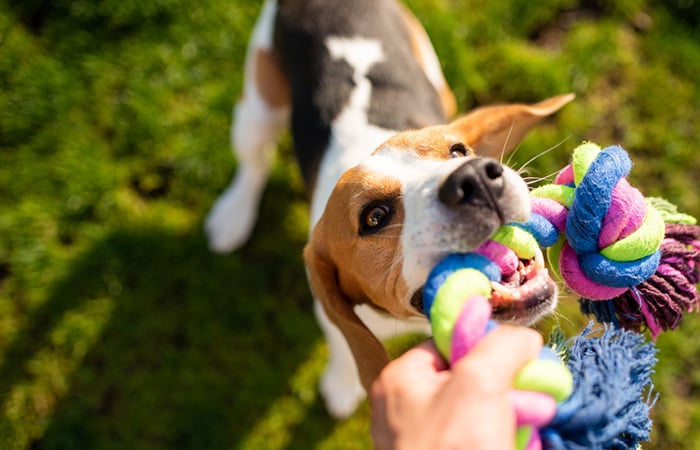
From a dog-friendly picnic or playdate to a relaxing spa day, discover 10 of the best ways to show your dog you love them.
Quick Links
1. Pack a dog-friendly picnic
Whatever the weather, it’s no secret that dogs love spending time outdoors – so why not pack a picnic they can enjoy too?
Load up on some tasty homemade treats, fresh water, your dog’s favourite toys and a blanket. Find a peaceful spot where pets are welcome and let your dog enjoy the sights and smells around them.
If your dog’s recall isn’t the best, take a long lead so they can roam without wandering off.
2. Organise a doggy playdate
Once you’ve been through the puppy socialisation stage, your dog might not spend as much time around other dogs. But socialising with others is important for your pet’s physical and mental wellbeing.
Organising a doggy playdate is a great way torefresh their socialisation skills and a good chance for you to catch up with other dog owners in your area.
Try meeting on neutral ground and keep the first playdate brief, such as by starting with a short walk on the lead. If that goes well, you can try longer walks, play sessions off the lead, or even a visit to one of Petplan’s Dog Adventure Parks.
3. Treat your dog to a spa day
Massage isn’t just a good way to soothe your dog’s muscles and improve their circulation; it can also help strengthen the bond between you.
Try treating your dog to a pet-safe spa day with a bath and a massage. If you don’t have the space at home – or if the weather is particularly nice – use one of Petplan’s Dog Wash sites to bathe and dry your dog before heading home for a pamper session.
Follow these steps to give your dog a massage:
- Start by petting your dog all over and talking to them softly to help them relax.
- Gently work the flat of your palm from the top of your dog’s head down to their neck muscles, massaging them in a circular motion.
- Work down to the shoulder area (often a favourite spot, as dogs can’t reach this themselves), massaging in a circular motion.
- Next, massage the chest and front legs, but be careful of the paw pads, and move on or skip these areas if your dog doesn’t like them being touched.
- Move to the shoulders and make small circular motions along the back on either side of the spine.
- Progress to the base of the tail and go down the back legs, continuing to their paws if they enjoy it.
During your dog’s massage, watch out for any signs of pain. If you notice your dog barking or whining when you touch a specific area, it’s a good idea to ask your vet for advice.
If you have dog insurance with Petplan, you can also use our Pet Expert Chat feature, which connects you with vet experts, to ask any health-related questions. Simply log in to your My Petplan account to get started.
4. Rotate dog toys to keep them exciting
Dogs love variety, so a great way to show your dog you love them is by refreshing their toys.
Divide your dog’s toys into sets and put them on a weekly rotation. When you unpack a new lot, it’s like giving your dog a whole new set of toys. Swapping them after a week also stops your dog from getting bored.
5. Make time for games
Games are a great way to keep your dog mentally and physically stimulated, but they also help you bond. Try some dog-friendly games like tug-of-war, brain training or even teaching your dog to tidy up their toys.
Make chasing a fun activity by using a flirt pole – a length of pole attached to a rope with a toy at the end. This is a great way to exercise in a small outdoor place, but it can also help with your dog’s training. Try practising basic commands like sit, look, wait, take it and drop it.
Rough and tumble games can overexcite some dogs, so take a break if your dog is getting overstimulated.
6. Give your dog a job
In the past, dogs were often bred to do specific jobs like herding, hunting or retrieving. Giving your dog a household job or chore can help channel their energy, which is especially important for active, intelligent dog breeds likeBorder Collies, German Shepherds and Golden Retrievers.
Try teaching your dog activities such as:
- Pushing a door closed
- Tidying their toys away
- Putting things in the bin
- Fetching the newspaper
- Taking a message upstairs
- Waking up a family member
- Picking up something you dropped
7. Make the indoors fun
During bad weather, your dog’s walks might get shorter, and they’ll spend less time outside. Try keeping them entertained with indoor activities like finding a treat under plastic cups, chasing a ball along the hallway or learning a new trick to keep bad behaviour at bay.
You could even make an indoor agility course with brooms, chairs and blankets. Or ask your dog to practise their skills in quick succession: sit, down, roll, stay, come, high five, wave. Make the order random to keep them thinking, and give them plenty of praise and rewards when they get it right.
8. Mix up exercise routines
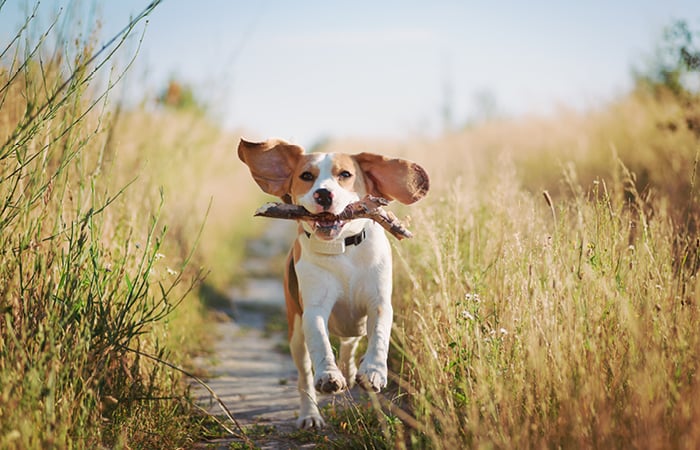
Walks are important for your dog’s physical health and emotional wellbeing, but sticking to the same route can get boring for both of you. Exploring new places helps mix up your routine and offers plenty of mental stimulation.
Try visiting a beach, park or woods you’ve never been to. Remember that for dogs, walks are all aboutsniffing new scents, so be patient if they linger. If possible, try to give your dog some time off the lead to explore, but make sure the area is safe and that your dog’s recall is reliable.
Even though new experiences are important, remember that dogs need the security and reliability of a structured life. Stick to a routine for meals and walk times, but use new tricks, treats and places to add interest and excitement.
9. Keep your dog entertained when they’re home alone
Dogs are pack animals, so being left alone for long periods can cause stress and even separation anxiety. Try not to leave your dog home alone too often or for too long. When you do have to go out, make sure your dog has something to keep them entertained.
Slow-feeder treat dispensers, puzzle toys and long-lasting chews all give your dog something to do until you’re home. If you’re agadget lover, a pet camera is a great way to check what your dog’s doing when you’re out.
If you’re planning to be out of the house all day, consider taking your dog to a dog day care, where they’ll get plenty of physical exercise and mental stimulation. Or, book a dog walker to take them out in the middle of the day.
10. Offer praise, routine and boundaries
While treats and days out are a wonderful way to reward your dog, maintaining boundaries and consistent training are just as important for nurturing a positive relationship.
Verbal and physical praise help your dog understand that their good behaviour is appreciated and forms a key part of positive reinforcement training. Similarly, addressing unwanted behaviour promptly helps your dog feel more secure and confident in the long run.
A strong bond built on boundaries, structure and consistent praise is far more effective than training through fear or shouting. It’s easy to fall out of the habit of praising your dog once they’ve moved beyond thepuppy training stage, but continuing to recognise and reward good behaviour is essential for keeping your bond strong.
Do dogs know we love them?
Dogs might not experience love in the same way we do, but affection, play and food make them feel cared for and protected. Every positive training session, walk, cuddle and game will help to build a connection between the two of you.
Research shows that when dogs and theirfavourite people share positive moments, both of their brains release oxytocin – the ‘love hormone’. So, as you enjoy one of the activities above, watch forsigns that your dog is happy, such as a relaxed posture, following you around or joyful barks.
Found this article useful? Want to see similar content and engage with like-minded dog owners? Follow us on Petplan’s Facebook page.
Nick Jones MA

Related articles






.jpeg)
Follow us

Petplan is a trading name of Pet Plan Limited (Registered in England No. 1282939) and Allianz Insurance plc (Registered in England No. 84638), Registered office: 57 Ladymead, Guildford, Surrey GU1 1DB.
Pet Plan Limited is authorised and regulated by the Financial Conduct Authority. Financial Services Register No. 311969. Allianz Insurance plc is authorised by the Prudential Regulation Authority and regulated by the Financial Conduct Authority and the Prudential Regulation Authority. Financial Services Register No. 121849. Pet Plan Limited is a subsidiary of Allianz Insurance plc.