
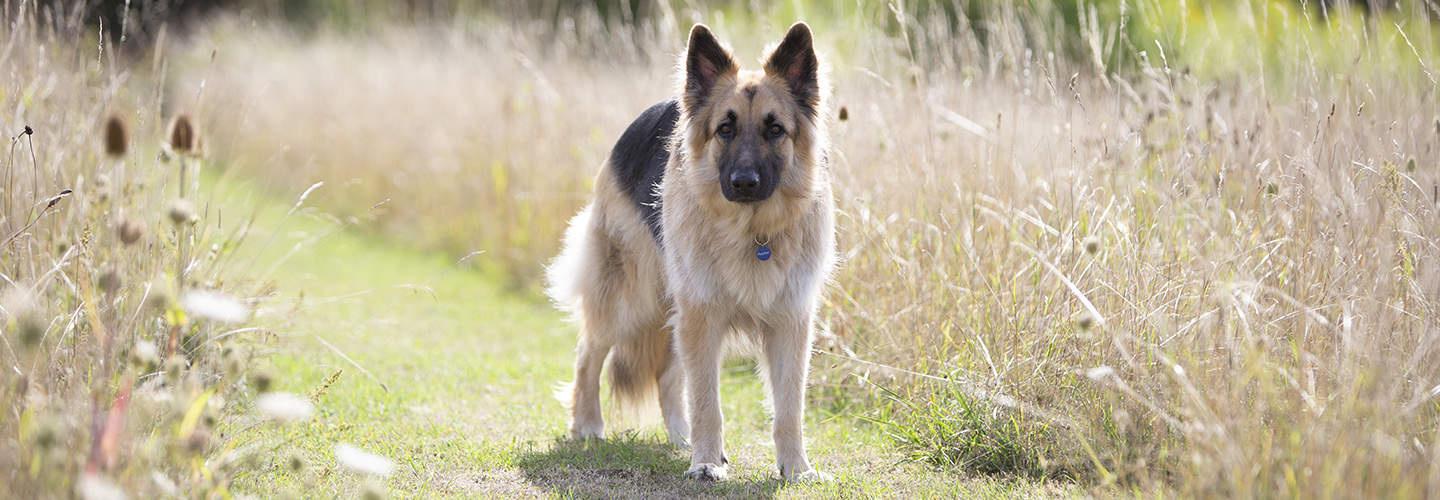
The German Shepherd is a highly intelligent breed, originally used for herding sheep. Also known as the Alsatian or GSD, these talented dogs have a dedicated, trainable temperament. If you have the time to invest in this breed, they make great family pets.
Facts & advice
German Shepherd

A loyal, intelligent companion who’s always ready to learn something new
Vital stats
Swipe to view more
| Size: | Large |
| Coat: | Double coat, groom weekly |
| Exercise | 2+ hours a day for adult dogs |
| Life span: | 10+ years |
| Breed group: | Working/ Herding |
| Temperament: | Loyal, intelligent, energetic |
German Shepherd temperament & personality

German Shepherds are intelligent, versatile and loyal. They have a natural instinct to protect, which means they’re devoted to their families. Their intelligence and energy also makes them a natural choice as working dogs.
German shepherd temperament
- German Shepherds love spending time with their families and may struggle with separation anxiety.
- This breed isn’t naturally aggressive, but their protective instinct means they can be reserved with strangers.
- They tend to be gentle with children and other animals, but behavioural problems may arise if German Shepherds are left alone for too long, or don’t get enough mental and physical stimulation.
German shepherd personality traits
- German Shepherds are highly trainable and obedient, making them a great choice for owners wanting a smart and loyal pet.
- German Shepherds have a strong, loud bark, but with proper socialisation and training their tendency to be vocal can be reduced.
- German Shepherds are confident and courageous, making extremely devoted companions.
German Shepherd training & exercise

Smart and eager to please, the German Shepherd’s attentiveness and trainability has made them one of the most versatile breeds in the world.
Training tips
- German Shepherd puppies should start their training when they’re eight weeks old. If not given structured training from an early age, this breed will quickly make their own rules.
- Don’t forget about lead training, since it’s much easier to teach a large breed to walk nicely on the lead while they’re still small.
- As a loyal breed, GSDs can be defensive with strangers. Early socialisation training is essential, as it introduces your puppy to a wide range of new people, places and experiences.
Exercise
- A combination of stamina, intelligence and enthusiasm means adult German Shepherds need at least two hours of exercise per day, plus plenty of mental stimulation.
Keeping them happy
- German Shepherds are keen to please and sensitive to their owner’s reactions. Focus on using positive reinforcement with plenty of praise for good behaviour. Ignore ‘bad’ behaviour or say a quick ‘no’ before moving on.
- Without enough mental and physical stimulation, GSDs can burn off excess energy through destructive or unwanted behaviours, including chewing, chasing, pulling on the lead and barking.
Game ideas
- German Shepherds love games that involve finding objects, tracking and retrieving.
- As an owner-focused breed, German Shepherds typically enjoy obedience training.
Common health problems with German Shepherds
Some health conditions affect German Shepherds more often than other dog breeds. In our experience, lameness was the most common condition we saw in German Shepherds in 2024 – we paid £1,496.78 to treat Merlin the German Shepherd in the same year.
We’ve outlined some of the other common health issues we see more in German Shepherds than in other dog breeds below.
The skin is the largest organ of a dog’s body and can be affected by a number of disorders. GSDs can suffer from allergies that lead to dermatitis (skin inflammation).
In our experience, these allergies can be caused by many different items, including things that are inhaled (like pollen or dust mites), items that are eaten (for example, wheat), items that the dog comes into contact with (such as washing powders), or bites from parasites such as fleas.
As allergies cannot be cured, treatment may be required for life – though this is usually effective enough to ensure that your dog can enjoy a happy, normal existence.
German Shepherds are prone to exocrine pancreatic insufficiency (EPI), which occurs when a dog’s pancreas doesn’t produce enough crucial digestive enzymes. The shortage of digestive enzymes in the bowel means the dog can’t digest and absorb food properly.
Treatment is in the form of replacement digestive enzymes added to the food. This is required for life but means the dog can live normally.
Hemangiosarcoma is a rapidly growing cancer that develops in the lining of blood vessels in organs such as the spleen, liver and kidney. Unfortunately, the tumour often spreads quickly, making the chances of survival very low by the time it is diagnosed.
This cancer can affect all breeds, but in our experience, German Shepherds are particularly at risk. Early diagnosis and treatment offer the best chance of survival.
Larger breeds like the German Shepherd can be prone to hip dysplasia. This develops when the bones that form the hip joint develop abnormalities in the cartilage that lines the surface of the joint or structures around it. This leads to the development of arthritis, which shows as stiffness (especially after lying down), and a reluctance to exercise or go up and down stairs.
Long-term treatment or even surgery may be required. You can minimise your chances of having a German Shepherd with hip dysplasia by buying your dog from a reputable breeder. Good breeders will be able to provide evidence of health checks for both parents, including their hip and elbow scores.
German Shepherds can be prone to a distressing condition called anal furunculosis. Similar in some ways to Crohn’s disease in humans, the condition leads to ulcers and inflammation around the dog’s anus.
Depending on the nature and severity of the condition, different treatments are available, such as surgery and immunosuppressive medicines. The condition may require ongoing attention, but most dogs are able to live normal, active lives.

German Shepherd grooming guide

German Shepherds have a thick, double coat which protects them from the elements. They do shed, so need regular grooming to keep their coat in good condition.
- German Shepherds shed all year, but particularly in spring and autumn. Weekly grooming sessions keep their coat healthy and shedding under control.
- GSDs have a medium-length, double coat with a coarse outer layer and a soft, thick undercoat.
- Regular bathing isn’t recommended, since this can strip your dog’s coat of its natural, protective oils.
German Shepherd diet and nutrition
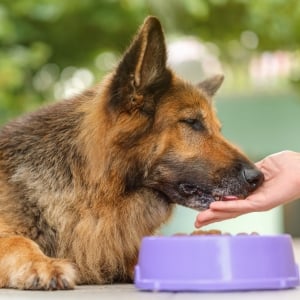
It’s important to keep your German Shepherd at a healthy weight, to reduce the risk of joint-related issues such as lameness and hip dysplasia.
- It’s important to use dog food designed for large breeds. This ensures the correct balance of calcium and energy during growth and adulthood. If you’re not sure which brand to use, ask your vet for advice. If you have German Shepherd insurance with Petplan, you can also use our Pet Expert Chat to connect with veterinary professionals any time of day or night – simply log into your My Petplan account to access.
- German Shepherds can be prone to gastrointestinal issues, so sticking to a feeding schedule is important, as is avoiding table scraps and too many treats.
- As a deep-chested breed, GSDs can be prone to bloat. Make sure you know the warning signs, and avoid exercising your dog for at least an hour before and after mealtimes.
Getting a German Shepherd

Considering buying or rehoming a German Shepherd? Before you find a puppy or adopt, it’s time to decide whether to adopt your new dog from a rehoming centre or buy from a reputable breeder. Here’s everything you need to know about both options.
Rehoming centres
- Adopting a rescue dog can be a very rewarding experience. A good place to start is contacting local centres to ask if they have any German Shepherds available for adoption. Petplan works with rehoming centres across the UK, including Dogs Trust, Battersea Dogs & Cats Home and Blue Cross.
- Rehoming a dog is a big decision, so make sure you’ve done your research and that you’re fully prepared to support a large, active and intelligent breed like the German Shepherd.
- If you’re a first-time dog owner, adopting a young adult dog, between two and five years old, is a good choice. They’ll be through the puppy stages, but still young enough to fit into your family. If you’re an experienced owner, adopting an older German Shepherd is also a highly fulfilling experience, as these dogs often get overlooked.
Breeders
If you’d prefer to buy a puppy, it’s important to find a responsible breeder. Look for breeders in your area, or further afield if you’re happy to travel. If they’re selling more than three litters per year, breeders in the UK must have a licence, so it’s worth asking to see this.
Breeders should be happy for you to meet both parent dogs, visit the puppies in their home and answer any questions you have.
When visiting German Shepherd puppies, the mother should always be present. Observe how she interacts with you and the breeder, and ask questions about her temperament and health.
Puppies should never go to their new homes before they’re eight weeks old. Breeders who work with Petplan will also offer four weeks of free insurance, which you can then extend.
German Shepherd FAQs
German Shepherds can make excellent family dogs. They’re people-oriented, active and love spending time with their owners. With proper socialisation and training, they can be a great addition to a family home. Like all breeds, German Shepherds should always be supervised when they’re spending time with children.
- German Shepherds are one of the most intelligent dog breeds.
- This breed is a popular choice for police, military and search and rescue work, thanks to their trainability.
- German Shepherds often form strong bonds with one member of their family.
- They’re known for being loyal and alert.
- German Shepherds are prone to hip dysplasia and lameness, so joint health is important.
German Shepherds can be left alone for short periods but prefer spending time with their families. As a highly social breed, GSDs can develop separation anxiety if they’re left alone for too long, too often.
In the UK, German Shepherds don’t need to wear a muzzle in public. If your German Shepherd has shown signs of reactivity or aggression, it’s a good idea to work with a qualified behaviourist to identify and resolve any triggers. You might also choose to muzzle your dog as a precaution at certain times – for example, during vet visits.
External Video Content

Youtube is not available due to your cookie preferences.
Discover some of the most popular dog breeds
From family favourites to perfect city dogs, browse our breed profiles for expert advice on temperament, health conditions, exercise requirements and more.


Find out more about some of the UK's most popular dog breeds and discover which breed could be your ideal canine companion with our breed selector quiz.
German Shepherd insurance considerations
GSDs can sometimes suffer from gastrointestinal disorders and may be prone to genetic disorders like hip dysplasia. As some of these conditions are lifelong, it’s important that when choosing dog insurance that you check for any limits in your cover and understand how long conditions will be covered for.
We always offer these things as standard:

Physiotherapy
Physiotherapy & pet therapies
Along with physiotherapy, which is covered within the Vet Bills benefit, we also cover Pet Therapies like herbal medicine, homeopathy and acupuncture. You can also claim for hydrotherapy, up to £500 per illness/injury in dogs and cats (no additional limit for rabbits).









Related articles







Follow us

Petplan is a trading name of Pet Plan Limited (Registered in England No. 1282939) and Allianz Insurance plc (Registered in England No. 84638), Registered office: 57 Ladymead, Guildford, Surrey GU1 1DB.
Pet Plan Limited is authorised and regulated by the Financial Conduct Authority. Financial Services Register No. 311969. Allianz Insurance plc is authorised by the Prudential Regulation Authority and regulated by the Financial Conduct Authority and the Prudential Regulation Authority. Financial Services Register No. 121849. Pet Plan Limited is a subsidiary of Allianz Insurance plc.