
- Smile for the camera! Dog owners are more likely than cat owners – 43% versus 35% – to use a pet monitoring camera.
- GPS collars and trackers were the most popular form of pet tech (41% of all respondents). Millennials (aged 29 to 44) were the most likely (47%) to say they use GPS trackers.
- Women were more likely to express interest in pet security than men – 40% versus 36% – and were 5% more likely to cite “peace of mind” as a reason to get a pet monitoring camera.
- Gen Z (aged 18 to 28) were the most likely (34%) to express concerns about the cost of pet technology, such as subscription fees.
- People in the West Midlands (47%) and Scotland (44%) were most likely to express interest in advanced health monitoring, while the East Midlands had the highest interest in pet security (45%).
Pet tech explored: How UK pet owners are embracing technology
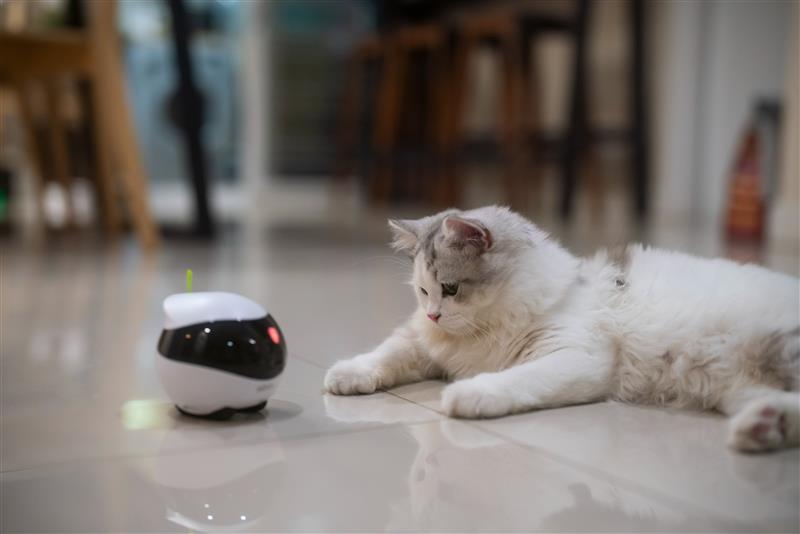
We all know that technology has transformed the lives of people, but what about pets? We polled 1,000 UK dog or cat owners to discover if they feel ‘pet tech’ has made their lives richer or paw-er.
Quick Links
The changing face of pet tech
These days, the ways we interact with our pets has come a long way from simply playing ‘fetch’. Thanks to a new generation of pet tech, we can monitor our pets’ health, their wellbeing and even their whereabouts.
First, we asked dog or cat owners who own at least one form of pet technology to reveal their must-have gadgets.
What, if any, pet technology do you currently use for your pet?
Swipe to view more
| GPS collars/location monitoring trackers | 41% |
| Pet camera (e.g. for monitoring, treat dispensing) | 37% |
| Electronic toys (e.g. automatic ball launchers) | 36% |
| Smart water fountain | 28% |
| Pet health monitors/trackers (e.g. activity, sleep, heart rate) | 28% |
| Automatic feeders | 23% |
| Microchip cat flap | 21% |
| Self-cleaning litter trays | 17% |
| Smart pet doors | 16% |
| Other | 0.2% |
| I do not use any pet technology | 0% |
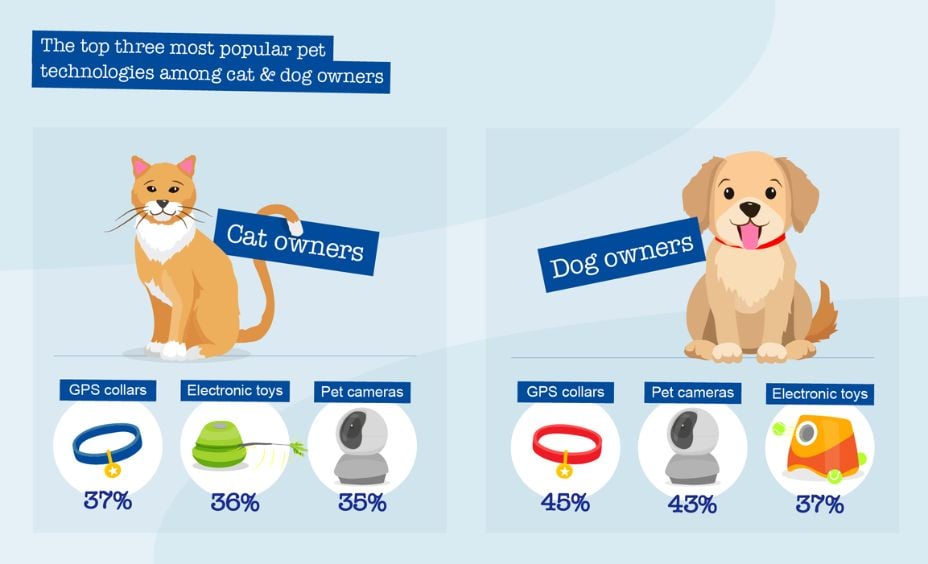
Across the generations, millennials (aged 29 to 44) were the most likely (47%) to use GPS trackers. This compares to 32% of Gen X (aged 45-60) and 36% of Baby Boomers , aged 61 to 79.
And when it comes to pet products, cat and dog owners often see things differently.
- 45% of dog owners use a GPS collar or tracker versus 37% of cat owners.
- Dog owners were also more likely to use a pet camera - 43% versus 35%.
- For cat owners, microchip cat flaps were understandably popular (33%) while more than a quarter (26%) use self-cleaning litter trays.
Great tech-xpectations
What’s motivating pet owners to embrace technology?
Pet monitoring cameras
The biggest motivation for getting a pet camera was “peace of mind” (58%) which rose to 65% among Gen X (aged 45 to 60).
Meanwhile, women were more likely than men – 60% versus 55% – to cite “peace of mind” as the reason for using a pet camera.
Self-cleaning litter trays
Cleaning a litter tray is surely one of life’s ickier tasks. But for pet owners who plumped for that magical self-cleaning tray, the top motive (45%) was “it offers convenience and saves me time”. Baby Boomers were the most likely to answer ‘convenience’ (57%).
Electronic toys
Cuddly toys, blankets and comforters will always have their place in any pet home. But for many pet owners, electronic toys are all about fun. More than half (52%) of respondents – and 55% of cat owners – said that electronic gadgets, such as automatic ball launchers, “provide entertainment or enrichment for my pet”.
Troubled by tech?
While many cat and dog owners have embraced technology, pet owners also told us about their concerns.
Swipe to view more
| High initial cost of the device or ongoing subscription fees | 31% |
| Potential discomfort, irritation, or stress for my pet | 26% |
| Lack of reliability or accuracy of the device/data | 24% |
| Overreliance on technology (e.g. potentially reducing human interaction) | 23% |
| Data privacy or security issues | 23% |
| No concerns | 20% |
| Difficulty of use, complex setup, or troubleshooting | 19% |
| Not effective, doesn't meet expectations, or seems unnecessary | 15% |
| Other | 0.3% |
For cat owners, comfort is king. 29% of cat owners expressed concerns about “potential discomfort, irritation, or stress for my pet” when it comes to technology, compared to 25% of dog owners.
Concerns about the cost of technology was similar among cat (31%) and dog (33%) owners, but highest among Gen Z (34%) versus 25% of Baby Boomers.
On the other hand, a fifth (20%) of pet owners told us they have “no concerns” about pet technology. This rose with age – 9% of Gen Z expressed no concerns, versus 41% of Baby Boomers.
So, how can we enjoy the healthiest possible relationship with pet tech?
We spoke to Petplan veterinary expert Dr Brian Faulkner on the possibilities and pitfalls of pet technology.
“In our busy lives, technology can enhance and simplify our daily pet routine. But there’s no substitute for the everyday warmth and affection of our pet encounters.”
“Ultimately, pet technology should help us get closer, not further apart, from our pets.”
Our pet tech future
Whether we’re ‘all in’ on the benefits of pet tech, or we have certain reservations, how would we like to see technology – and our relationship to it – evolve?
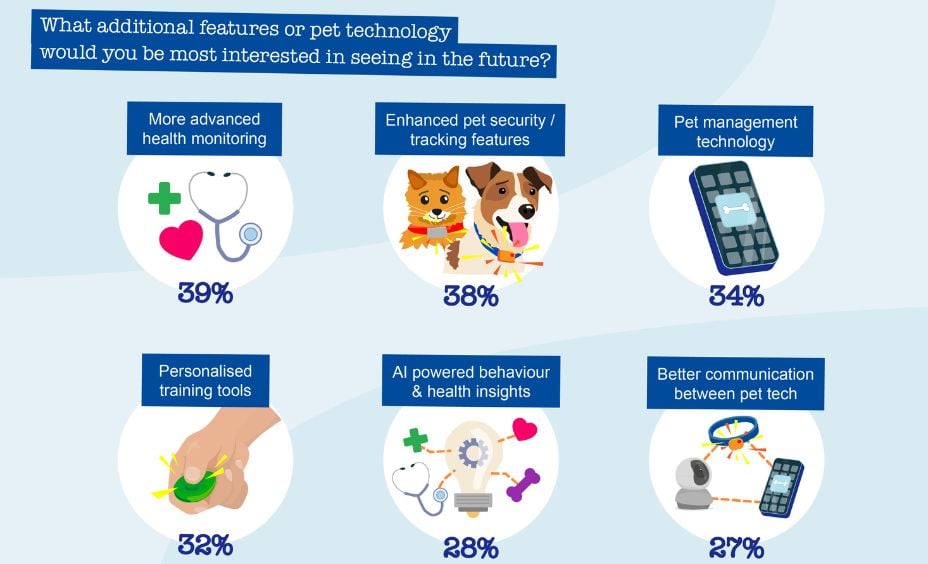
What, if any, additional features or types of pet technology would you be the most interested in seeing?
Swipe to view more
| More advanced health monitoring for early disease detection | 39% |
| Enhanced pet security and anti-theft tracking features | 38% |
| Technology to help manage multiple pets more easily (e.g. separate feeding, tracking) | 34% |
| Personalised training or enrichment tools tailored to individual pets | 32% |
| AI-powered insights into pet behaviour, mood, or health trends | 28% |
| Better integration and communication between different pet tech devices | 27% |
| I am not interested in any new pet technology | 9% |
There was a strong appetite for proactive and preventative pet healthcare among both cat (39%) and dog (41%) owners. Regionally, people in the West Midlands (47%) and Scotland (44%) were most likely to express interest in advanced health monitoring.
A desire for enhanced pet security was slightly higher among women than men – 40% versus 36% – and was highest in the East Midlands (45%).
Our hopes and expectations for pet technology have evolved, but as Dr Brian Faulkner suggests, some things haven’t changed.
“Pet owners understandably want their cats and dogs to feel safer, healthier and in a better mood. But while technology can help us feel more secure, no device is infallible. If you have any concerns about their health or behaviour your should always consult your vet."
Things to consider when buying pet tech
- What does your pet actually need? No two pets are the same, so think about their behavioural norms and what problem you're trying to solve.
- Are there hidden costs? Watch out for subscription fees. Forget the paw print - check out the small print!
- Remember to find a balance. Technology should complement, but not replace, your relationship with your pet. Think about your daily pet routine and how technology can enhance - not hinder - those activities.
Found this article useful? Want to see similar content and engage with like-minded pet owners? Follow us on Petplan’s Facebook page.
Methodology: Survey of 1,000 nationally representative UK cat or dog owners (aged 18+) who use and own at least one pet technology (excluding automatic feeders). The survey was conducted by Censuswide on behalf of Petplan between 24.12.2025 – 29.12.2025.
Related articles








Follow us

Petplan is a trading name of Pet Plan Limited (Registered in England and Wales with company number 1282939) and Allianz Insurance plc (Registered in England and Wales with company number 84638).
Pet Plan Limited is authorised and regulated by the Financial Conduct Authority. Financial Services reference number 311969. Allianz Insurance plc is authorised by the Prudential Regulation Authority and regulated by the Financial Conduct Authority and the Prudential Regulation Authority, reference number 121849. Registered address: 15 Bishopsgate, London, EC2N 3AR.