Your guide to rabbit fleas and other parasites

Brian Faulkner - Article expert
Dr Brian Faulkner
Veterinary Surgeon
RCVS Registered
two black and white rabbits
Discover how to identify rabbit fleas and other parasites, as well as which flea treatments for rabbits are considered safe.

Quick Links

While rabbits are less likely to get fleas than cats or dogs, it’s still possible. Fleas don’t just result in skin irritation – they can also cause a range of other health conditions.

Here’s how to check for rabbit fleas and other parasites, as well as the best flea medication for rabbits.

Fleas on rabbits are less common than in dogs and cats, but they can sometimes become an issue. Most fleas on rabbits come from: 

  • Wild rabbits 
  • Other pets with fleas
  • People accidentally bringing flea eggs, pupae or larvae into your home or your rabbits’ hutch on their clothing or shoes

Fleas can transmit myxomatosis, a viral infection that’s often fatal. To stop the spread of this disease, flea prevention for rabbits is very important.

Rabbit fleas are extremely small, so they can be hard to spot. Signs your rabbits have fleas include:

  • Dandruff
  • Scratching 
  • Nibbling or biting their skin
  • Areas of redness or hair loss 
  • Black specks of ‘flea dirt’ in their coats

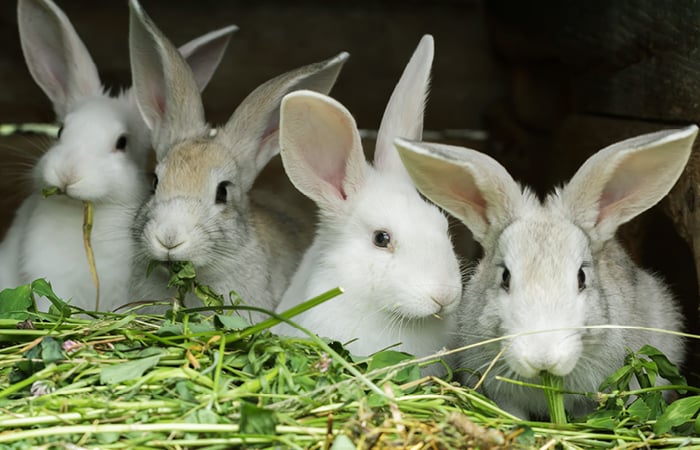
As flea infestations get worse, you might be able to spot fleas moving through your rabbit’s coat. They’ll typically be easier to spot in rabbit breeds with white coats, such as the New Zealand White

Rabbits with a large flea infestation can also suffer from anaemia, which causes pale gums and weakness.

If you think your rabbits have fleas:

  • Take a piece of a kitchen towel and dampen it slightly
  • Groom your rabbits with a fine-tooth comb
  • Tap the comb over the kitchen towel 
  • Watch for any tiny black specks
  • Wait a few minutes to see if they leave red-brown patches on the kitchen towel

These small black specks are flea droppings, sometimes called ‘flea dirt’. If you see them, it’s a sign your rabbits have fleas and will need treatment.

When it comes to flea control for rabbits, treatment should always be recommended by a vet. The most common option is a spot-on treatment designed specifically for rabbits. Sometimes these are designed to treat worms at the same time. 

Speak to your vet and ask which brand of rabbit flea and worm treatment they suggest. If you have rabbit insurance with Petplan, you can also use our Pet Expert Chat feature to connect with veterinary professionals and ask questions at any time.

Some flea treatments designed for dogs and cats contain fipronil, which is highly toxic to rabbits and should never be used on them. Always use a flea treatment specifically for rabbits. 

If you’ve recently used a flea treatment containing fipronil on any other household pets, keep them away from your rabbits until the treatment is fully dry, and your vet confirms it’s safe. 

When treating rabbits for fleas, it’s also important to clean your rabbit’s hutch and enclosure to remove flea eggs, pupae and larvae to prevent reinfestation.


In addition to fleas, here are some other common external parasites on rabbits.

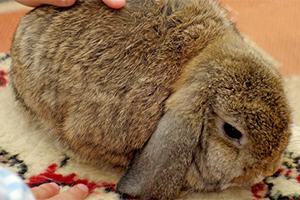
These tiny parasites can cause irritation, dandruff and itching. Rabbit ear mites are also common, especially in lop-eared breeds like the Holland Lop and English Lop. Mites can be controlled using a spot-on treatment or an injection prescribed by your vet.

These can sometimes be found in long grass or may drop off your dog after a walk, then attach to your rabbit. To remove them, you’ll need to use a specific removal tool, or speak to your vet for advice.

These insects are common in warm, damp weather. Remove any standing water in plant pots or buckets near your rabbits’ hutch, so mosquitoes can’t easily breed.

Like fleas, mites and mosquitoes can also transmit myxomatosis, so if you see signs of these parasites, mite and flea protection for rabbits is essential.

Yes. If your dog has fleas, these can spread through your home or jump onto your rabbit if they live in the same area.

It’s unusual for rabbits to get fleas from hay, unless it’s recently been stored in an area with a heavy flea infestation. It’s more likely for them to catch fleas from another animal.

If you’re looking for rabbit flea control, the best approach is to speak to your vet. They’ll recommend a vet-approved treatment that’s safe for rabbits.

Found this article useful? Want to see similar content and engage with like-minded rabbit owners? Follow us on Petplan’s Facebook page.
Brian Faulkner - Article expert
FRCVS Petplan Vet Expert

Brian has been a vet for over 30 years. He is a past-President of the UK Society of Practising Veterinary Surgeons and an Associate Professor at Nottingham Veterinary School. He has worked in more than 250 veterinary practices as a clinician, as well as hundreds more as a consultant, and confidence coach.

Find out more about Brian

Follow us

Petplan is a trading name of Pet Plan Limited (Registered in England No. 1282939) and Allianz Insurance plc (Registered in England No. 84638), Registered office: 57 Ladymead, Guildford, Surrey GU1 1DB.

Pet Plan Limited is authorised and regulated by the Financial Conduct Authority. Financial Services Register No. 311969. Allianz Insurance plc is authorised by the Prudential Regulation Authority and regulated by the Financial Conduct Authority and the Prudential Regulation Authority. Financial Services Register No. 121849. Pet Plan Limited is a subsidiary of Allianz Insurance plc.