Cats sleep in all sorts of weird and wonderful positions, but what is your cat’s sleeping position telling you?
Discover the most common cat sleeping positions below – and what they might mean.

Cats sleep in all sorts of weird and wonderful positions, but what is your cat’s sleeping position telling you?
Discover the most common cat sleeping positions below – and what they might mean.
Is your cat sleeping in a ball position?
If your cat is sleeping in a curled position with their nose next to their tail – also described as the ‘croissant’, ‘crescent’ or ‘shrimp’ – they might be cold. The cat crescent sleeping position helps them retain body heat, while also protecting some of their vital organs by surrounding them with bone and muscle.
As a result, the cat croissant sleeping position can reflect instinctive self-protection behaviour and may be a sign that your cat wishes to be left undisturbed while they sleep.
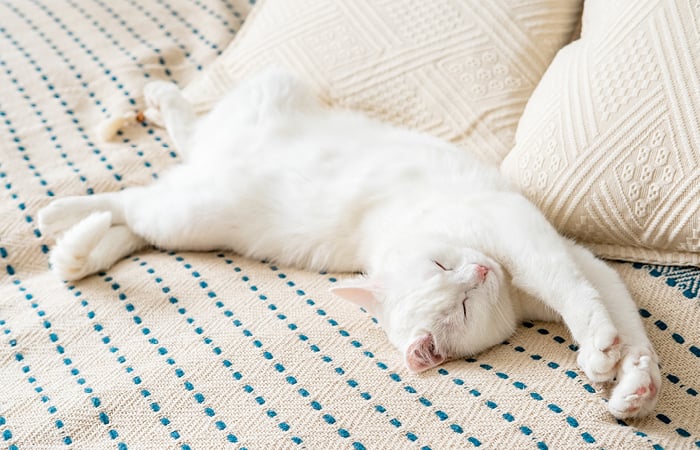
When your cat splays out and twists their torso in one direction and the other part of them in the opposite direction – sometimes referred to as the ‘cat pretzel’ sleeping position – it’s a sign they’re feeling physically relaxed and flexible, as they’re comfortable enough to twist into an unusual shape.
If their limbs are loose and breathing is steady, this can also indicate that they’re in a deep rest state.
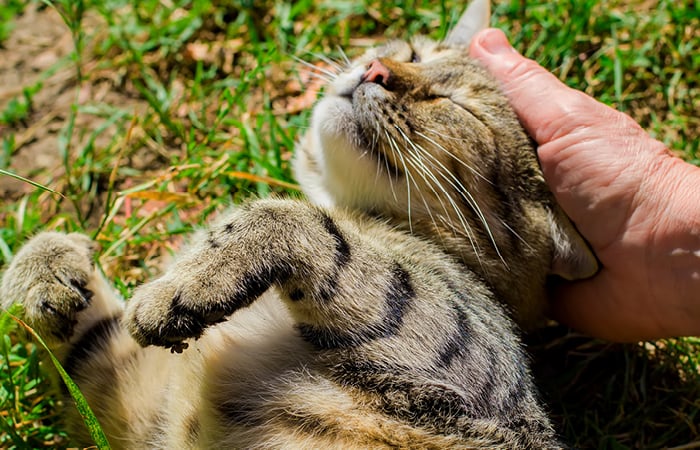
If your cat sleeps on their back, they’re likely feeling very comfortable in their surroundings. Not only are they leaving their belly and precious organs exposed, it’s also not easy for them to jump up and escape from this position.
Similarly, back sleeping may also indicate that your cat might be feeling too warm so is exposing their belly to cool down.
But while you might be tempted to give them a belly rub, it’s important to remember that many cats aren’t a fan of this.
The ‘sploot’ cat sleeping position is when they lie on their belly with their front paws stretched out in front and their back legs stretched out behind. This can be a way for your cat to cool down, particularly if they’re lying in this position on a cool floor.
It also can mean your cat feels safe, or is just enjoying some muscle relaxation and stretching after an activity.
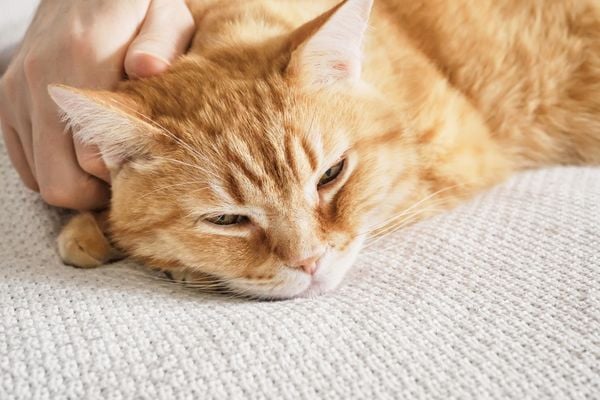
If your cat is sleeping on their side, this suggests they’re quite relaxed and at ease – it’s a common cat deep-sleep position. It’s also quite a vulnerable position for them, so again, it suggests they feel safe.
Cats often like to sleep like this to get some sunlight, or you might find them sleeping on a cold surface like this when it’s hot.
The ‘cat loaf’ sleeping position sees them tucking their front paws under their body, making them resemble a loaf of bread.
Cats can loaf while ‘feigning sleep’ (their eyes are closed, but their head is up and ears are twitching, signalling that they’re remaining vigilant), or when they’re actually asleep. This position allows them to rest and retain heat while also remaining alert to potential danger. If your cat is sleeping in the loaf position with their head down, though, this often indicates real comfort and relaxation.
Some people say their cat is sleeping in the ‘sphinx’ position. This is still a loaf shape, but the cat’s head is held up, and their paws are often untucked and out in front of them. This is when a cat wants to pause or rest but needs to make a quick getaway, which may signal they are not as comfortable in their current environment.
Be aware that the loaf position can also sometimes indicate pain or stress, so if other symptoms accompany it, it’s best to consult a vet. If you have cat insurance with Petplan, you can also log into your My Petplan account and access our Pet Expert Chat to speak with a vet.
Sometimes it can, but not always. Here’s what to know about when and where your cat might sleep.
Some cats like to sleep under blankets or other covers simply because of their instinct to hide from potential threats like predators or severe weather. For others, it can be for warmth or a stress response – for example, if there’s a new pet or visitor in the house.
Sometimes, cats like to sleep on the back of the sofa, on top of a shelf or a bookcase, or right at the top of their cat tree. This natural hunting behaviour provides a peaceful place away from household activity, but also a better vantage point over the room so they can keep an eye out for both predators and prey. In the home, ‘predators’ might be other pets and people, while prey could be their favourite toys.
If your cat likes to sleep in bed next to you, they simply want to be close to their favourite person. It might be your smell that they’re after, or they may simply want affection, warmth and security. Some cats aren’t comfortable sleeping directly on someone but are still happy to be vulnerable next to you.
Like a cat who sleeps next to you, a cat who sleeps on top of you wants to be close to you. They might find your heartbeat, your voice or the motion of your breathing comforting and soothing.
Cat sleeping positions might vary depending on a range of factors, from their mood and the number of people in the house to the temperature and season. Many cats will also sleep in all sorts of different positions – sometimes in the same day.
Most cat sleeping positions are usually nothing to worry about. But if you become concerned or your cat’s sleeping behaviour changes significantly, it’s best to speak to your vet.

Petplan is a trading name of Pet Plan Limited (Registered in England and Wales with company number 1282939) and Allianz Insurance plc (Registered in England and Wales with company number 84638).
Pet Plan Limited is authorised and regulated by the Financial Conduct Authority. Financial Services reference number 311969. Allianz Insurance plc is authorised by the Prudential Regulation Authority and regulated by the Financial Conduct Authority and the Prudential Regulation Authority, reference number 121849. Registered address: 15 Bishopsgate, London, EC2N 3AR.