Cats that need extra care in summer

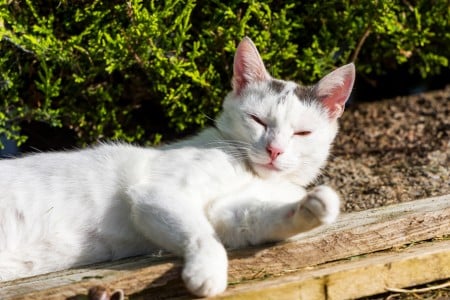
white cat in the sunshine

Quick Links

We often think of cats as self-reliant – and in many ways, they are. Compared with dogs, they generally cope better in warm weather. Cats tend to regulate their own activity and instinctively seek out cooler places to rest when temperatures rise.

However, like humans, cats aren’t always aware when they’re at risk. “Many of us are familiar with the danger of dogs overheating during the hotter months, but cats are equally vulnerable,” explains Dr James Greenwood. “Very old or young cats, those with thick coats, flat faces or certain health conditions are particularly at risk. But by understanding the dangers and recognising early warning signs, owners can help keep their cats safe and comfortable in hot weather.”

During summer, cats can experience issues such as hyperthermia, sunburn and cat heatstroke. While tools such as cat cooling mats, shaded spaces and regular grooming help them to stay comfortable, some breeds and body types are more vulnerable to heat and UV exposure than others.

Understanding which cats are most at risk can make it much easier to keep them safe during warmer months. So, which cats need the most care in hot weather?
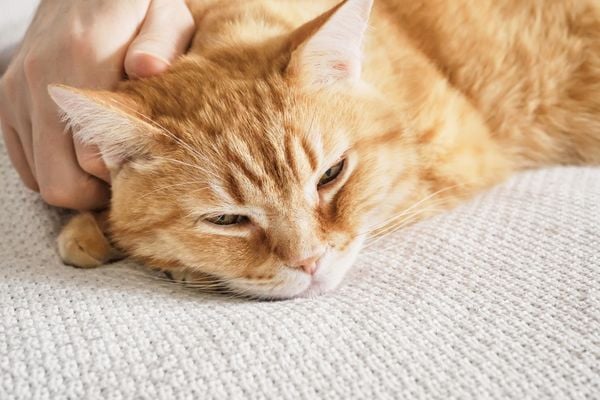
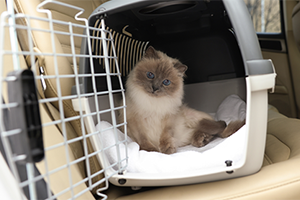
Brachycephalic (flat-faced) breeds such as Persians, Himalayans, British Shorthairs and Exotic Shorthairs are the result of selective breeding. Their shortened nasal passages impair their ability to pant and regulate heat efficiently, so they are at increased risk of cat heatstroke. It's also worth noting that flat-faced breeds can overheat even on relatively cool days.

If you own a flat-faced cat, monitor them closely in warm weather and take protective measures if necessary. Occasional snorting and snoring, for example, is normal, but laboured or rapid breathing is not. A healthy resting cat takes around 20-30 breaths per minute. If you notice faster or noisier breathing (raspiness), this could be a sign your cat is overheating.

  • Bright red gums or tongue
  • Glazed eyes
  • Disorientation (e.g. stumbling)
  • Diarrhoea
  • Vomiting

These are all serious cat heatstroke symptoms. If you notice any of these signs, contact your vet immediately.

Persians, Maine Coons, Ragdolls and Norwegian Forest Cats originate from cold climates and, as such, have thick, insulating coats to protect them against freezing temperatures. Although they have adapted to live elsewhere, their coats can still trap heat in the summer, so they will need extra care.

A cat cooling mat is a great way to cool down any cat, but is especially effective for those breeds prone to overheating. These specialised, portable mats regulate body temperature and generally come in two forms:

  • Mats containing a non-toxic gel that absorbs and dissipates body heat
  • Water-activated mats that use evaporative cooling to lower the temperature naturally

Placed in a quiet, shaded area, a cat cooling mat will give your fluffy feline a relaxing retreat whenever they need it.

All cats groom themselves – their comb-like papillae (spines on their tongue) remove dirt and loose hair very effectively. However, long-haired or fluffier cats will need brushing to prevent matting, which can trap extra heat.

Follow these tips to get started:

  • Use a specialised cat brush or wide-toothed dematting comb
  • Focus on the chest, abdomen, armpit area and backs of their legs (where knots often form, especially in outdoor cats)
  • Follow the direction of the fur and tease out knots slowly and gently
  • Brush once or twice a week

Some cats love being brushed, while others – not so much. If your cat is in the latter camp, reward them with a treat afterwards until they settle into the routine.

For indoor breeds, regular grooming combined with airflow and a cat cooling mat is key when considering how to keep indoor cats cool in hot weather.

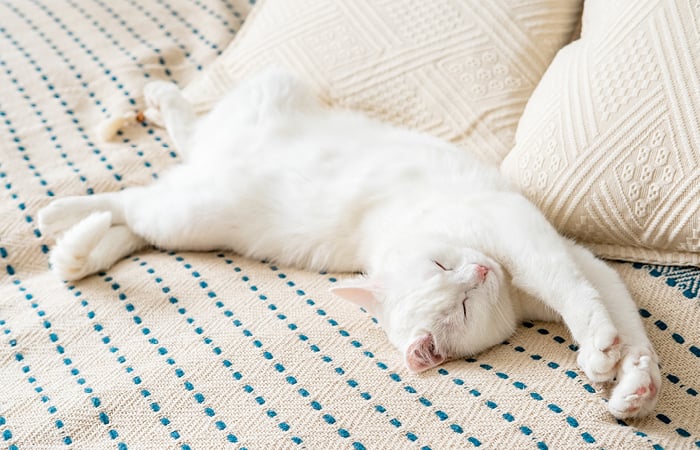
Due to their lack of fur, breeds such as Sphynx, Bambino, Donskoy and Peterbald are particularly vulnerable to the sun’s rays. And white cats, with less protective pigment in the skin and fur, are more prone to sunburn, blisters and even skin cancer than their darker-coated companions. Cat ear sunburn is also common in these breeds.

If your cat enjoys a spot of sunbathing...

  • Pay attention to how long they sit in the sun
  • Provide them with ample access to shade 
  • Use cat-safe sunscreen on hairless or vulnerable areas

Applying sunscreen to cats’ ears, noses, bellies and groin is a good idea for all breeds, as this is where hair is thinnest. But for hairless or white cats, cat sunscreen is essential.

There is specific sunscreen for Sphynx cats and other hairless breeds, but generally speaking, when looking for sun cream for your cat, avoid anything containing salicylates and zinc oxide, as these are toxic for cats. Sunscreens formulated for humans are not suitable for cats and should not be used.

Kittens have immature and therefore less efficient thermoregulatory systems. This inability to regulate body temperature can be problematic given their high energy levels. A boundless and excitable kitten can overheat rapidly.

How to keep a kitten cool in summer is about providing constant access to water, keeping them indoors during peak heat, using shaded play areas and avoiding intense play sessions during hot afternoons.

At the other end of the spectrum, elderly cats are at risk in summer due to age-related factors such as reduced thermoregulation or decreased mobility.

Other health issues, such as kidney disease and diabetes, cause chronic dehydration – a major factor in the management of heat stress. Plus, cardiovascular disorders can impair circulation and prevent cats’ bodies from dissipating heat efficiently. 

For elderly or unwell cats, prioritise hydration, airflow and ventilation, and ensure you move them away from heat sources – particularly if mobility is an issue.

This is especially important when considering how to keep indoor cats cool in hot weather, as senior cats may nap in sunspots for extended periods without realising the danger.

Cats with excess body fat have extra strain on their bodies – and since fat acts as insulation, this extra layer traps more heat than is necessary, increasing the likelihood of overheating.

Then there’s physical restriction. Obesity reduces mobility and increases the risk of chronic conditions such as osteoarthritis, which not only stops cats from moving out of the sun but also reduces their ability to groom effectively.

Respiratory strain can further impair natural cooling mechanisms such as panting, increasing the risk of heatstroke in a cat.

Weight management – such as portion control – and cooling strategies are crucial during the summer months.

Keeping cats safe in hot weather needn’t be difficult, but knowing which breeds are more vulnerable is important. Understanding how to cool down a cat is as much about preventing serious conditions as it is about your cat’s comfort. 

Because emergencies can escalate quickly, it’s worth considering what support you have in place. If you have cat insurance with Petplan, you can access our Pet Expert Chat by logging into your My Petplan account and speaking with an expert about your cat’s symptoms, behaviour changes or any concerns you may have during hot weather.

Found this article useful? Want to see similar content and engage with like-minded cat owners? Follow us on Petplan’s Facebook page.
Follow us

Petplan is a trading name of Pet Plan Limited (Registered in England No. 1282939) and Allianz Insurance plc (Registered in England No. 84638), Registered office: 57 Ladymead, Guildford, Surrey GU1 1DB.

Pet Plan Limited is authorised and regulated by the Financial Conduct Authority. Financial Services Register No. 311969. Allianz Insurance plc is authorised by the Prudential Regulation Authority and regulated by the Financial Conduct Authority and the Prudential Regulation Authority. Financial Services Register No. 121849. Pet Plan Limited is a subsidiary of Allianz Insurance plc.